
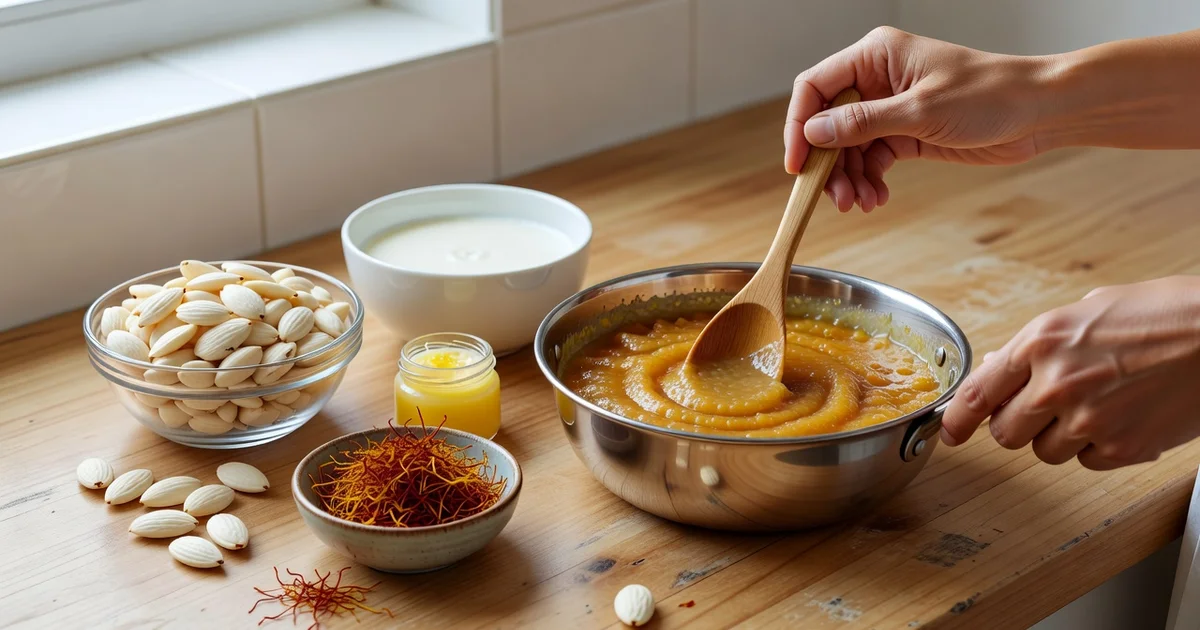
Rich, aromatic, and melt-in-your-mouth delicious, badam halwa is a classic Indian dessert that turns simple almonds into something truly special. While it may seem like a restaurant-only treat, making homemade badam halwa is easier than you think when you have the right technique and a few quality ingredients.
In this guide, we’ll walk you through each step—from soaking and blending almonds to achieving that perfect glossy, ghee-rich texture. Whether you’re preparing it for a festival, a family gathering, or simply to satisfy a craving, you’ll learn how to make badam halwa that tastes authentic and impressive every time.
Introduction
Badam halwa is a rich, aromatic Indian dessert made primarily from almonds, ghee, sugar, and often a touch of saffron or cardamom. Unlike many quick modern sweets, traditional badam halwa rewards patience: the almonds are soaked, peeled, ground into a smooth paste, then cooked slowly with sugar and ghee until the mixture thickens, releases a glossy sheen, and pulls away from the pan. The result is a dense, melt-in-the-mouth confection with a deep nutty flavor.
This article explores How to Prepare Delicious Homemade Badam Halwa with clear, practical guidance. Whether you are making it for a festival, a family gathering, or simply to enjoy a homemade treat, the process is straightforward once you understand the ratios, the cooking stages, and the small signals that tell you when the halwa is ready.
Key Concepts
Understanding the fundamentals of How to Prepare Delicious Homemade Badam Halwa helps you make informed decisions at every stage. Three ideas matter most: the almond base, the sweetening and fat balance, and the cooking technique.
The almond base determines texture. Whole raw almonds, soaked in warm water for several hours, slip out of their skins easily. Peeling matters because skins can make the paste slightly bitter and gritty. Once peeled, the almonds are ground with a little milk or water into a paste as smooth as possible. A coarse paste produces a halwa with a grainy bite; a fine paste produces the classic silky consistency.
The sweetening and fat balance controls flavor and shelf life. Sugar sweetens and helps the mixture set, while ghee adds richness and prevents sticking. The classic ratio is roughly one part almonds to half to three-quarters part sugar by weight, with ghee added gradually during cooking. Saffron soaked in warm milk adds color and aroma, and a pinch of ground cardamom brightens the finish.
Cooking technique is where beginners often struggle. Badam halwa must be cooked on low to medium heat with constant stirring. High heat scorches the paste and creates lumps. As the mixture cooks, it changes from a loose, pale batter to a thick, glossy mass that leaves the sides of the pan. That moment—when the halwa holds together and ghee begins to separate slightly—is the signal to stop.
Deep Dive
The difference between acceptable badam halwa and truly delicious badam halwa comes down to small details. First, use fresh almonds. Old, rancid nuts ruin the dessert no matter how careful the cooking. Second, soak long enough—at least four hours, preferably overnight—so the almonds grind smoothly. Third, grind in small batches and scrape down the sides of the blender, adding liquid a tablespoon at a time. Too much liquid means a longer cooking time and a greater chance of splattering.
Ghee quantity is another variable. Some recipes call for adding ghee only at the end; others add it in stages. Adding a tablespoon at a time during cooking helps the mixture stay glossy and prevents it from drying out. If you prefer a less rich halwa, reduce the ghee, but do not eliminate it entirely—ghee contributes essential flavor and helps the halwa release from the pan.
Sugar type also affects the outcome. Regular white sugar is standard and reliable. Jaggery or brown sugar can be used for a deeper, caramel-like flavor, but these contain more moisture and may require slightly longer cooking. Adjust gradually and taste as you go.
Finally, remember that badam halwa continues to firm up as it cools. Stop cooking when the mixture is thick but still slightly soft; if you cook until it is fully stiff in the pan, the cooled halwa will be dry and crumbly. Transfer it to a greased plate or tray, spread it evenly, and let it set before cutting into squares.
Step-by-Step Guide
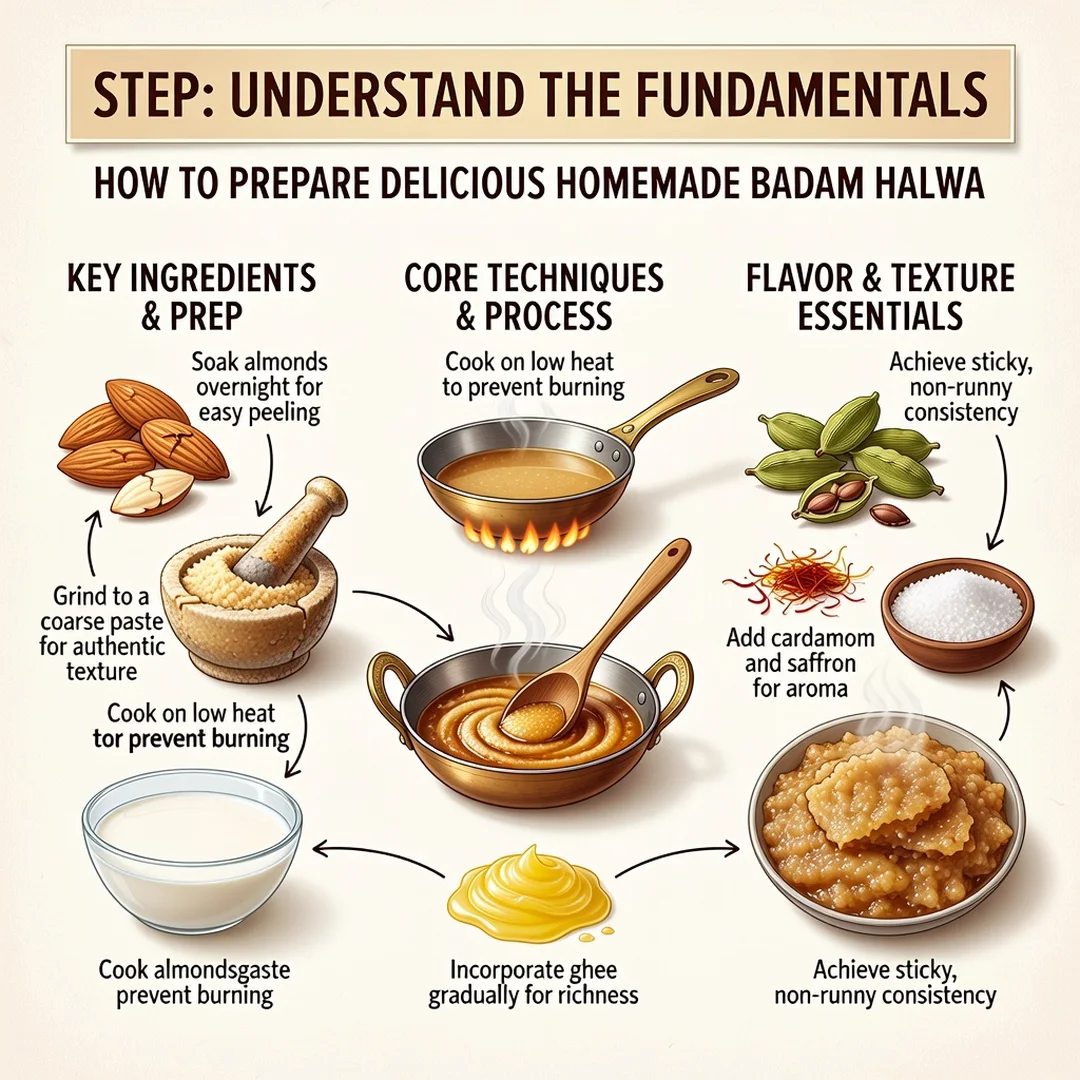
Step 1: Understand the fundamentals
Before you begin, review the core ratios and stages. Know that you need almonds, sugar, ghee, and a liquid such as milk or water. Understand that soaking, peeling, grinding, and slow cooking are the four pillars of the recipe. Knowing why each step matters prevents shortcuts that compromise texture and taste.
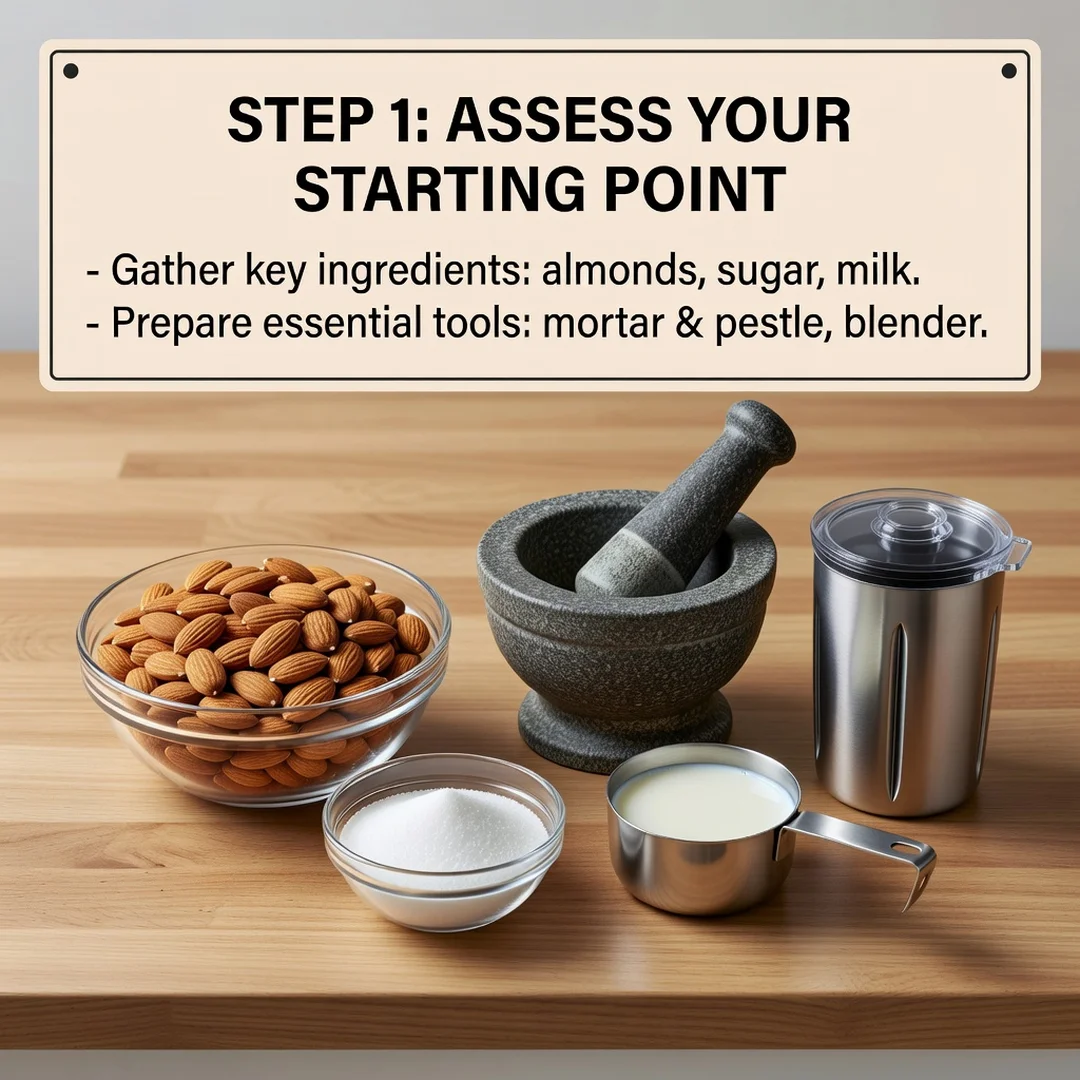
Step 2: Assess your starting point
Check your ingredients and equipment. Do you have raw whole almonds, not roasted or salted? Is your ghee fresh? Do you have a heavy-bottomed pan, a blender, and a spatula? If your almonds are older or your blender is weak, plan to soak longer and grind in smaller batches. Honest assessment now saves frustration later.
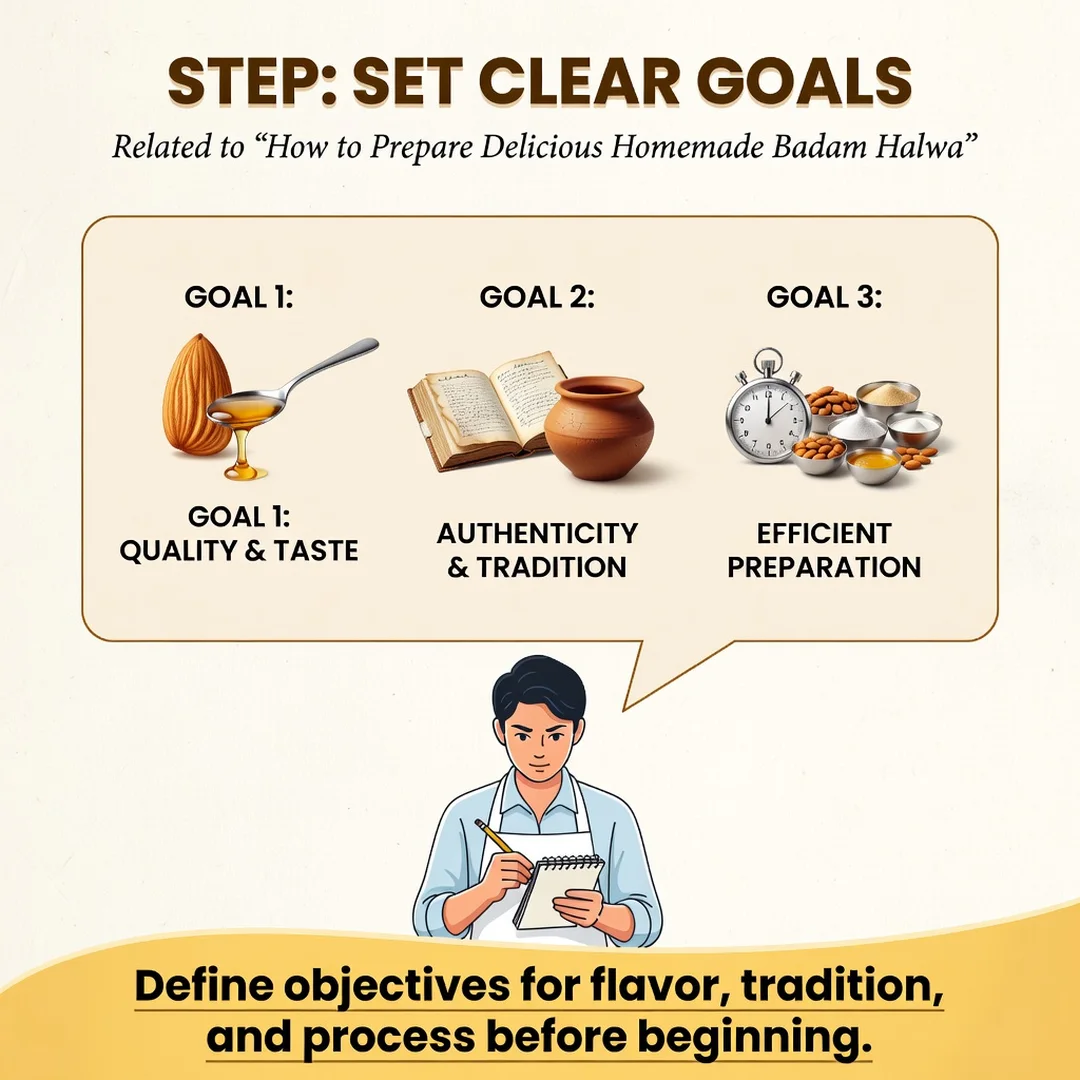
Step 3: Set clear goals
Decide what kind of halwa you want. A soft, spoonable halwa for immediate serving requires less cooking time than a firm, cuttable one for gifting. If you want a deep golden color, plan to use saffron or a few drops of natural food color. Clear goals help you judge when to stop cooking.
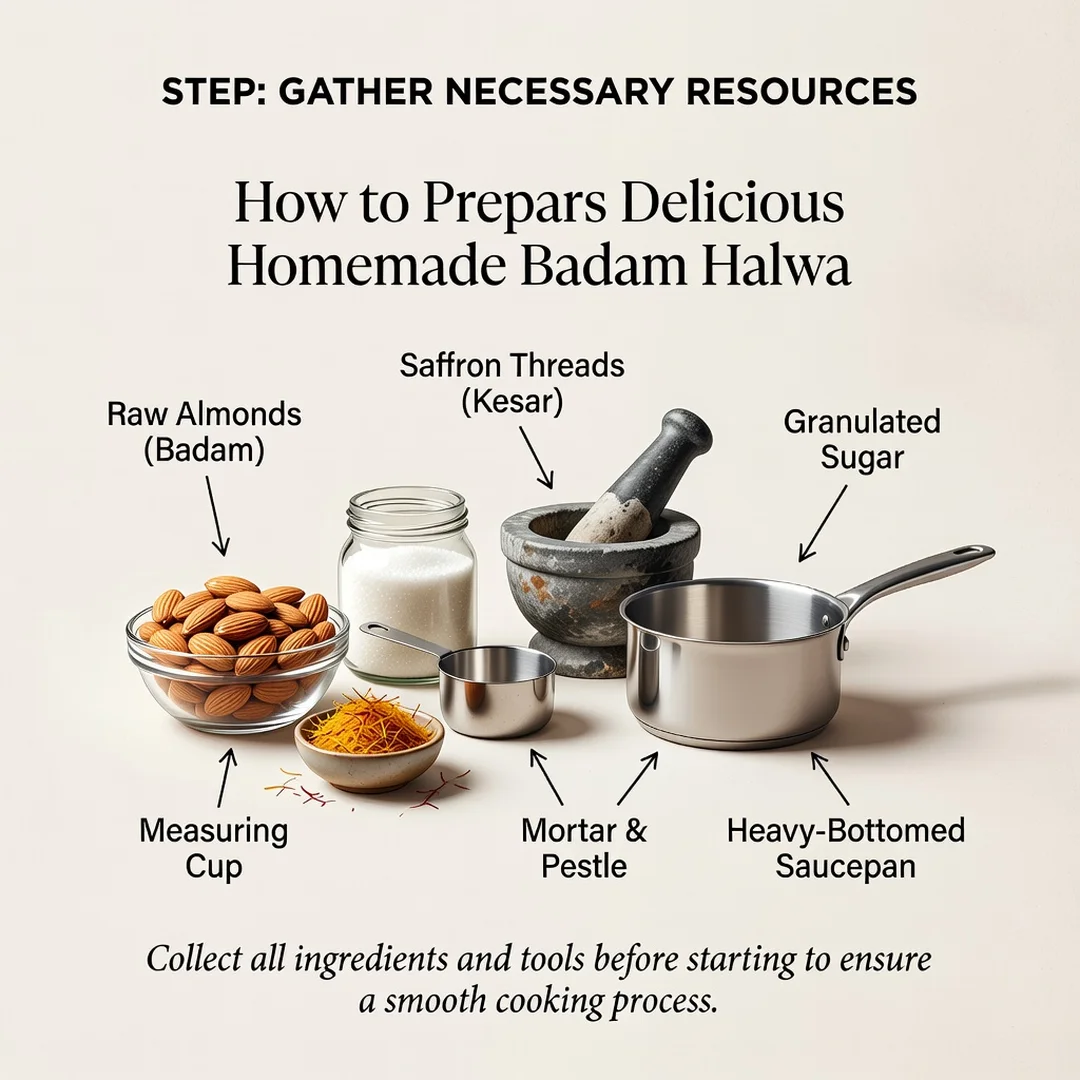
Step 4: Gather necessary resources
- 1 cup raw whole almonds
- 3/4 cup sugar, adjust to taste
- 1/2 cup ghee, plus extra for greasing
- 1/2 cup milk or water for grinding
- A pinch of saffron soaked in 1 tablespoon warm milk (optional)
- 1/4 teaspoon ground cardamom
- Heavy-bottomed pan, blender, spatula, greased plate
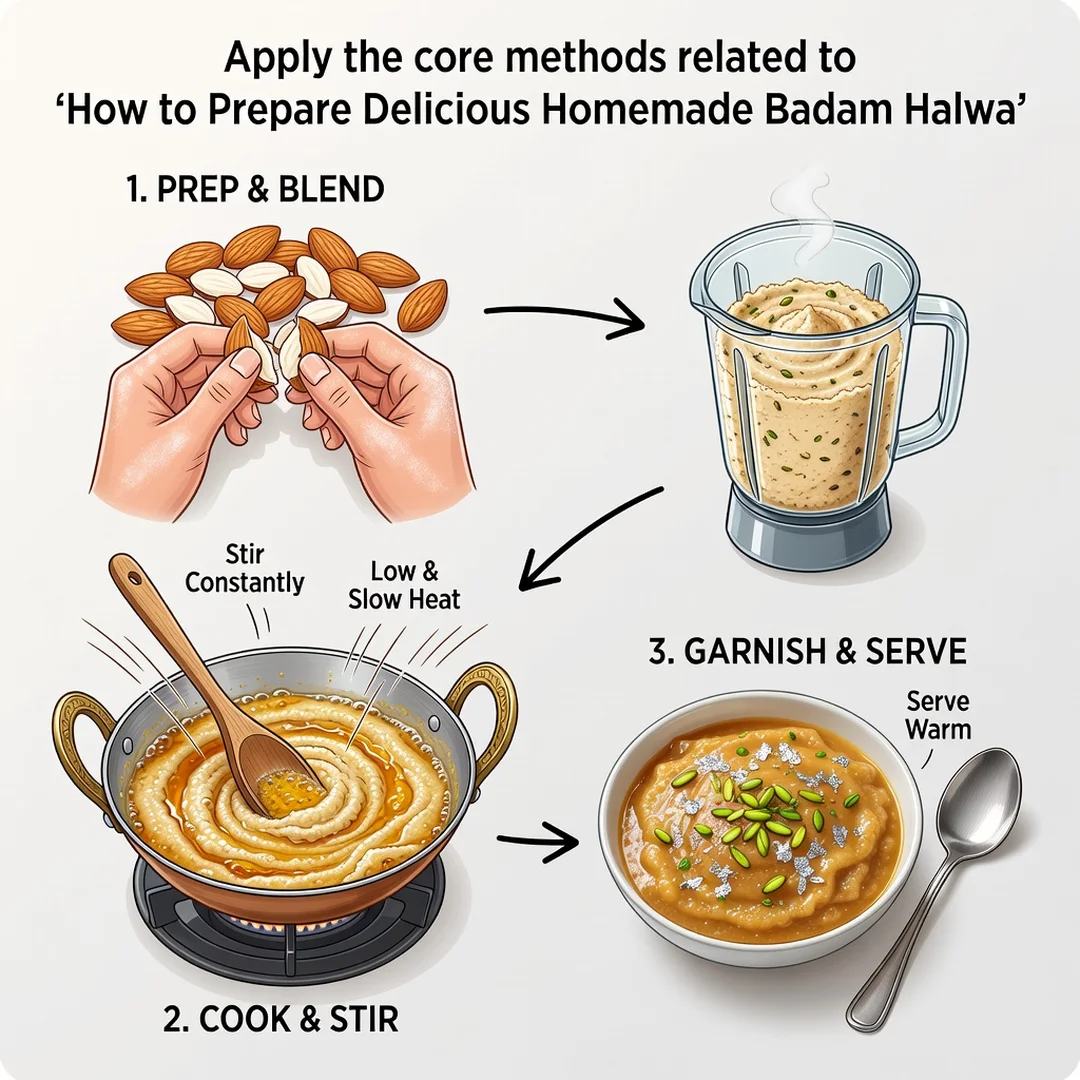
Step 5: Apply the core methods
Soak the almonds in warm water for at least four hours or overnight. Drain, peel, and grind with milk into a smooth paste. In a heavy pan, combine the paste and sugar over low heat. Stir constantly as the sugar melts and the mixture loosens. Add ghee one tablespoon at a time, allowing each addition to blend before adding more. Continue cooking and stirring until the mixture thickens, turns glossy, and pulls away from the sides of the pan. Stir in saffron milk and cardamom. Spread the halwa onto a greased plate, smooth the top, and let it cool. Cut into squares and serve.
Best Practices
- Stir continuously to prevent scorching and lumps.
- Keep the heat low; patience produces better texture than speed.
- Add ghee gradually rather than all at once.
- Grind almonds as smooth as possible for a silky finish.
- Taste before the final set and adjust sweetness if needed.
- Store in an airtight container in the refrigerator for up to a week.
Reliable information and consistent habits lead to better long-term outcomes. Each time you make badam halwa, note the cooking time and the texture you achieved. Small adjustments—a little less sugar, a little more ghee, a few extra minutes of stirring—compound into consistently excellent results.
FAQ
What should I know about How to Prepare Delicious Homemade Badam Halwa?
The most important things to know are that soaking and peeling the almonds is non-negotiable for smooth texture, that low heat and constant stirring prevent burning, and that the halwa thickens further as it cools. Use fresh almonds, add ghee gradually, and stop cooking when the mixture is glossy and pulls away from the pan.
Who is this guide for?
This guide is for home cooks of all experience levels who want a reliable, practical method for making badam halwa. It suits beginners who need clear steps and experienced cooks who want to refine ratios and technique. Anyone who enjoys Indian desserts and prefers homemade quality over store-bought can follow these instructions successfully.
Conclusion
Making delicious homemade badam halwa is less about secret ingredients and more about understanding the fundamentals, assessing your ingredients honestly, setting clear goals, gathering the right tools, and applying the core methods with patience. Soak, peel, grind, and cook slowly. Add ghee gradually, stir constantly, and trust the visual cues. With practice and consistent habits, you will produce a rich, fragrant halwa that rivals any sweet shop—and you will know exactly what went into it.
Frequently Asked Questions
What should I know about How to Prepare Delicious Homemade Badam Halwa?
This guide covers the essentials of How to Prepare Delicious Homemade Badam Halwa with practical steps you can apply right away.
Who is this guide for?
Anyone looking for a clear, structured overview without unnecessary complexity.
You now have a solid foundation for How to Prepare Delicious Homemade Badam Halwa. Apply the best practices above and revisit this guide as your needs evolve.