

When the temperature drops, our bodies naturally crave warmth, energy, and nourishment. That’s exactly why dry fruit sweets become a staple in Indian households during winter. Packed with almonds, cashews, pistachios, and dates, these treats offer a delicious way to stay energized while indulging your sweet tooth.
But their popularity isn’t just about taste. From boosting immunity to keeping you warm from the inside out, dry fruit sweets bring real health benefits to the colder months. In this article, we’ll explore why they’re a winter favorite and how you can enjoy them wisely.
Introduction
As temperatures drop, markets and sweet shops fill with colorful trays of dry fruit sweets — from rich badam barfi and pista rolls to date-and-nut laddoos and anjeer halwa. This seasonal surge is not a coincidence or a passing trend. Dry fruit sweets are popular during winter because they match what the body needs in cold weather: dense energy, warming properties, and nutrients that support immunity and circulation. This article explores why dry fruit sweets are popular during winter with clear, practical guidance, so you can enjoy them wisely and understand the reasoning behind their seasonal appeal.
If you have ever wondered whether these treats are simply festive indulgence or genuinely suited to the season, the answer lies in nutrition, tradition, and economics. Understanding the fundamentals of why dry fruit sweets are popular during winter helps you make informed decisions about what to buy, how much to eat, and how to incorporate them into a balanced winter routine.
Key Concepts
Before diving into the details, it helps to define a few core ideas that explain the winter popularity of dry fruit sweets.
- Thermogenesis and warming foods: Digestion itself generates heat. Nuts and dried fruits are calorie-dense and take longer to digest, which many traditional health systems associate with a warming effect on the body — welcome when the weather is cold.
- Seasonal nutrient density: Dry fruits such as almonds, cashews, pistachios, walnuts, dates, figs, and raisins provide concentrated fats, proteins, fiber, vitamins (especially B vitamins and vitamin E), and minerals like magnesium, potassium, and iron. In winter, fresh produce variety often shrinks, so these shelf-stable nutrients become more valuable.
- Cultural and festive association: Winter in many regions coincides with major festivals and wedding seasons. Dry fruit sweets are considered premium gifts and celebratory foods, reinforcing their seasonal visibility.
- Energy demands of cold weather: The body works harder to maintain core temperature. Calorie-dense sweets offer quick, sustained energy, which is why they appear at winter gatherings and outdoor events.
- Shelf life and practicality: Dry fruits resist spoilage, and sweets made from them keep longer than milk-based desserts in cool weather, making them convenient for hosting and gifting.
These concepts together explain both the biological and social pull of dry fruit sweets between November and February.
Deep Dive
To truly understand the winter popularity of dry fruit sweets, it is worth examining the nutritional, physiological, and cultural layers separately, then seeing how they reinforce one another.
Nutritional profile and winter wellness
Nuts and dried fruits are energy-dense by design. Almonds supply vitamin E and magnesium; walnuts are rich in omega-3 fatty acids; dates provide natural sugars, potassium, and fiber; figs contribute calcium and iron. When combined into sweets — often with ghee, jaggery, or honey — they create a compact source of macronutrients and micronutrients. In winter, when physical activity may drop but the body still burns energy to stay warm, this density is appealing. Traditional systems such as Ayurveda classify many nuts and dried fruits as warming, and recommend them in cold, dry months to counter balance.
Physiological comfort and satiety
Cold weather often increases appetite. Fats and proteins in dry fruit sweets slow gastric emptying, promoting satiety and a steady release of energy. That helps explain why a small piece of badam barfi feels more sustaining than a similar-sized milk chocolate. The inclusion of ghee or healthy fats further supports the feeling of warmth and fullness, making these sweets a practical snack during long winter evenings.
Cultural, social, and economic drivers
Winter is peak gifting and celebration season in many cultures. Dry fruit sweets have a premium image, travel well, and last longer than cream-based mithai. Shops promote them heavily, and families associate them with hospitality. Economically, dry fruit prices often rise in winter due to demand, which paradoxically enhances their status as a luxury item worth sharing.
Common misconceptions
- “Dry fruit sweets are always healthy.” They are nutritious but calorie-dense. Portion control matters.
- “They can replace meals.” They supplement, not substitute, a balanced diet.
- “More expensive means better.” Quality depends on fresh ingredients and minimal additives, not just price.
Best Practices
Enjoying dry fruit sweets during winter without overdoing it is straightforward when you follow a few sensible habits. Reliable information and consistent habits lead to better long-term outcomes.
- Choose quality ingredients: Look for sweets made with real nuts, dates, or figs rather than artificial flavors and excess sugar. Check labels for added syrups or preservatives.
- Practice portion control: One or two small pieces (about 20–30 grams) per serving is usually enough to satisfy a craving without excessive calories.
- Pair with protein or fiber: Combine a sweet with a handful of plain nuts or a cup of unsweetened tea to slow sugar absorption.
- Time it well: Enjoy them earlier in the day or after a meal rather than right before bed, to support digestion and sleep.
- Hydrate: Dry fruits are concentrated; drink enough water to help fiber do its job.
- Store properly: Keep sweets in airtight containers in a cool, dry place to preserve texture and prevent rancidity of nuts.
- Mind medical conditions: If you manage diabetes or nut allergies, consult a healthcare professional before regular consumption.
Step-by-Step Guide
If you want to make informed choices about dry fruit sweets this winter, follow this practical sequence.
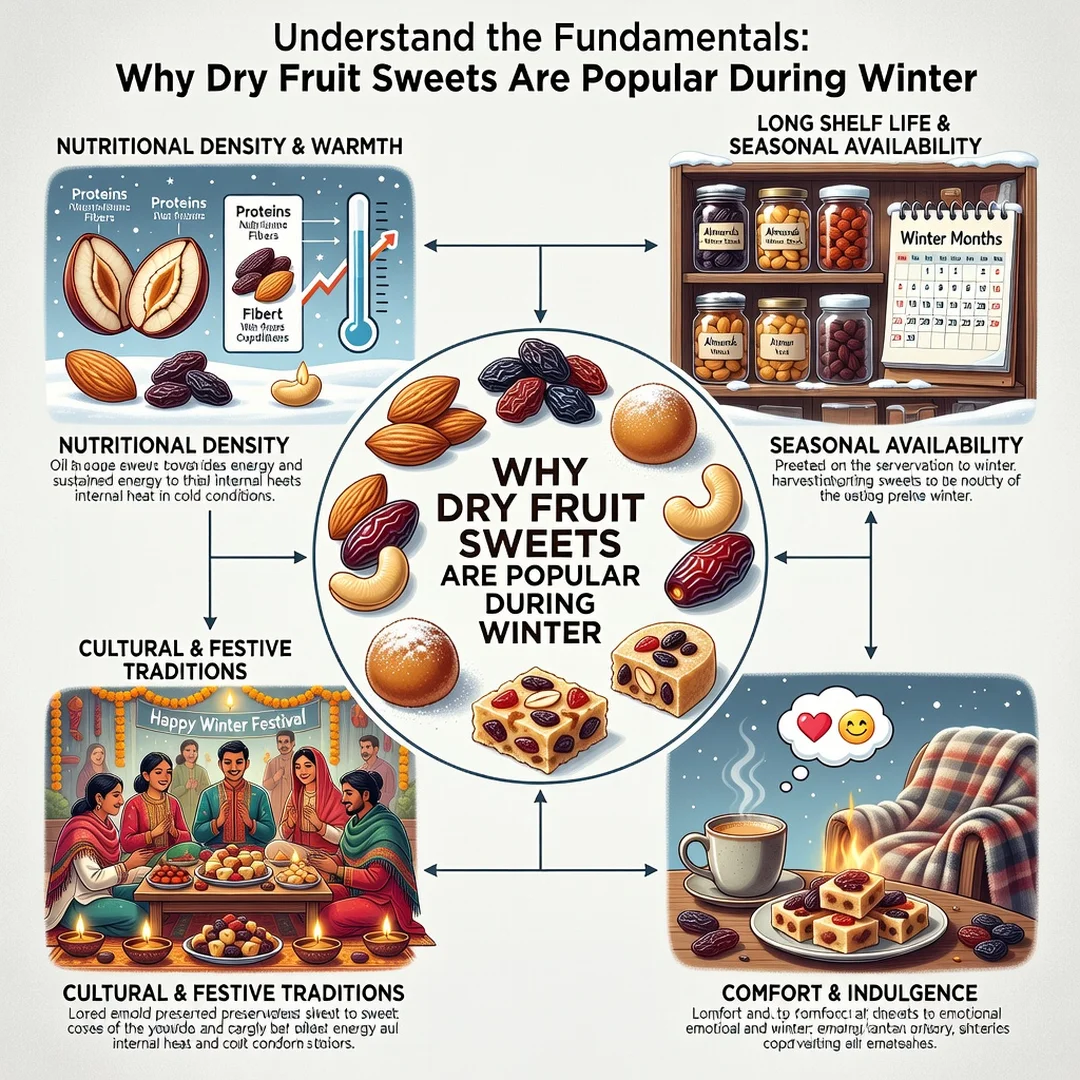
Step 1: Understand the fundamentals
Learn why these sweets are popular: they are energy-dense, warming, nutrient-rich, and culturally tied to winter celebrations. Knowing this helps you separate genuine benefits from marketing hype.

Step 2: Assess your starting point
Review your current diet, activity level, and any health conditions such as diabetes or allergies. Note how often you already eat sweets and whether you need more or fewer calories in winter.
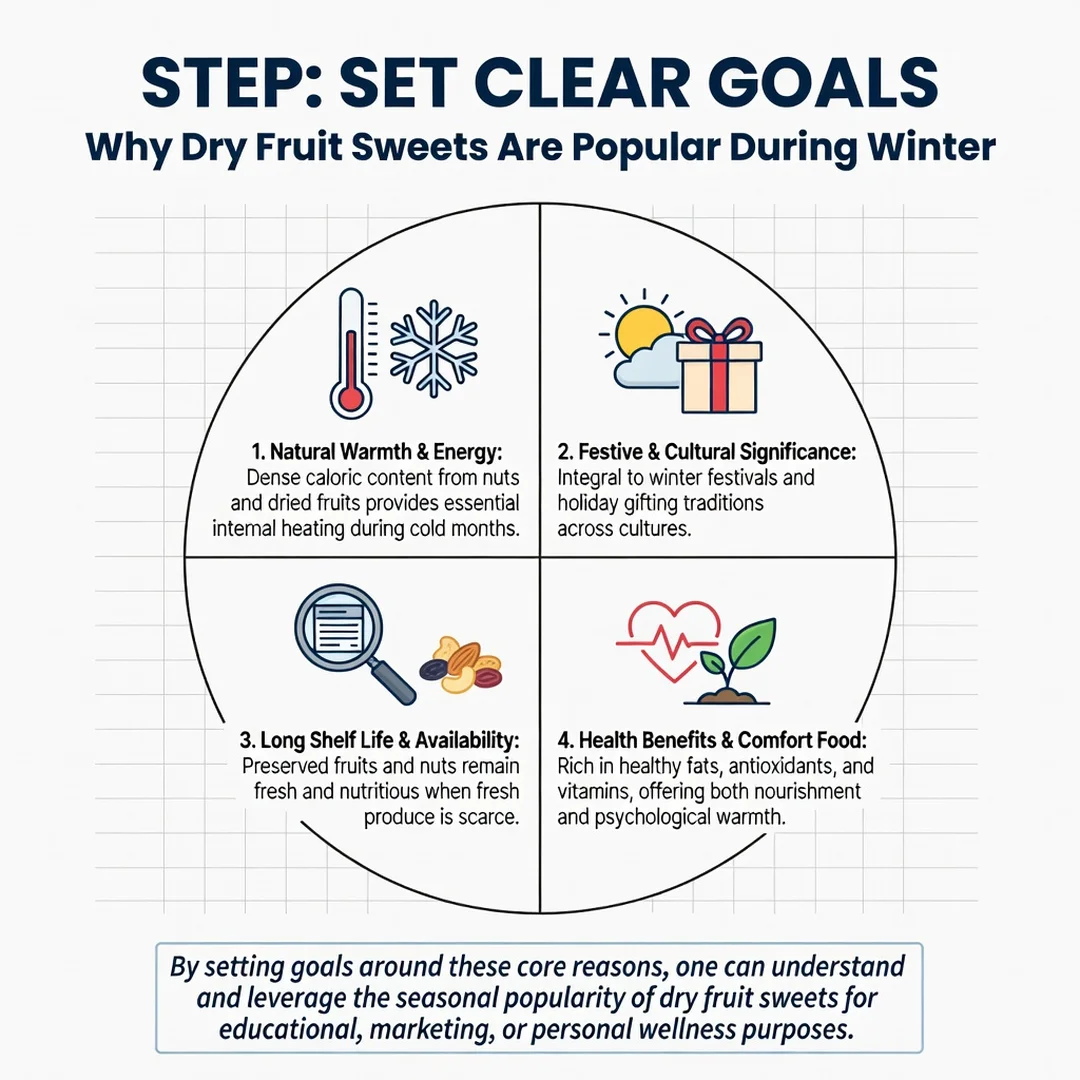
Step 3: Set clear goals
Decide what you want: enjoy seasonal treats mindfully, support energy levels, or find healthier dessert alternatives. A clear goal like “one small piece after lunch, three times a week” is more actionable than a vague intention.
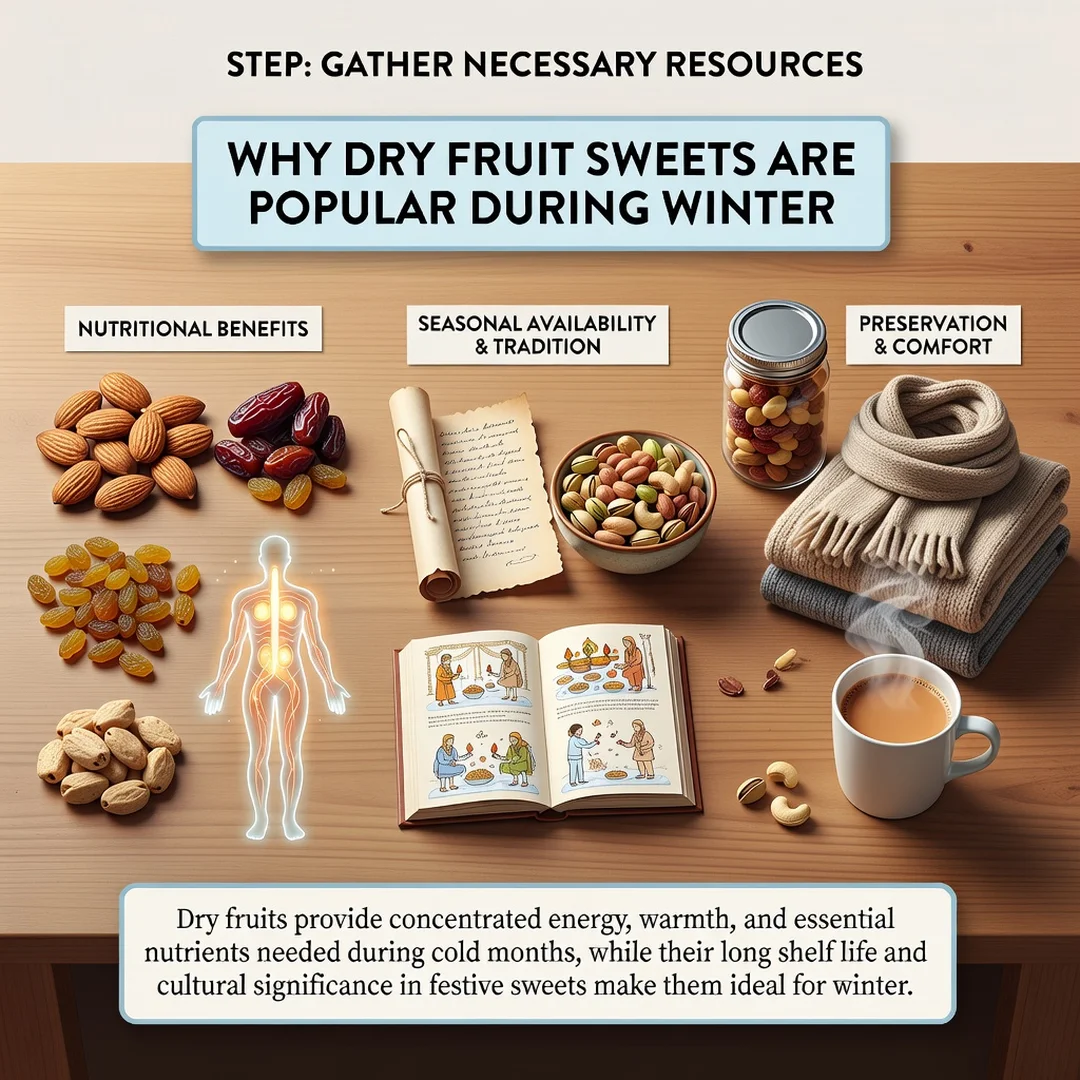
Step 4: Gather necessary resources
Identify reputable shops or recipes, check ingredient lists, and stock airtight containers. If you plan to make your own, gather fresh nuts, dates, figs, and a natural sweetener like jaggery or honey.
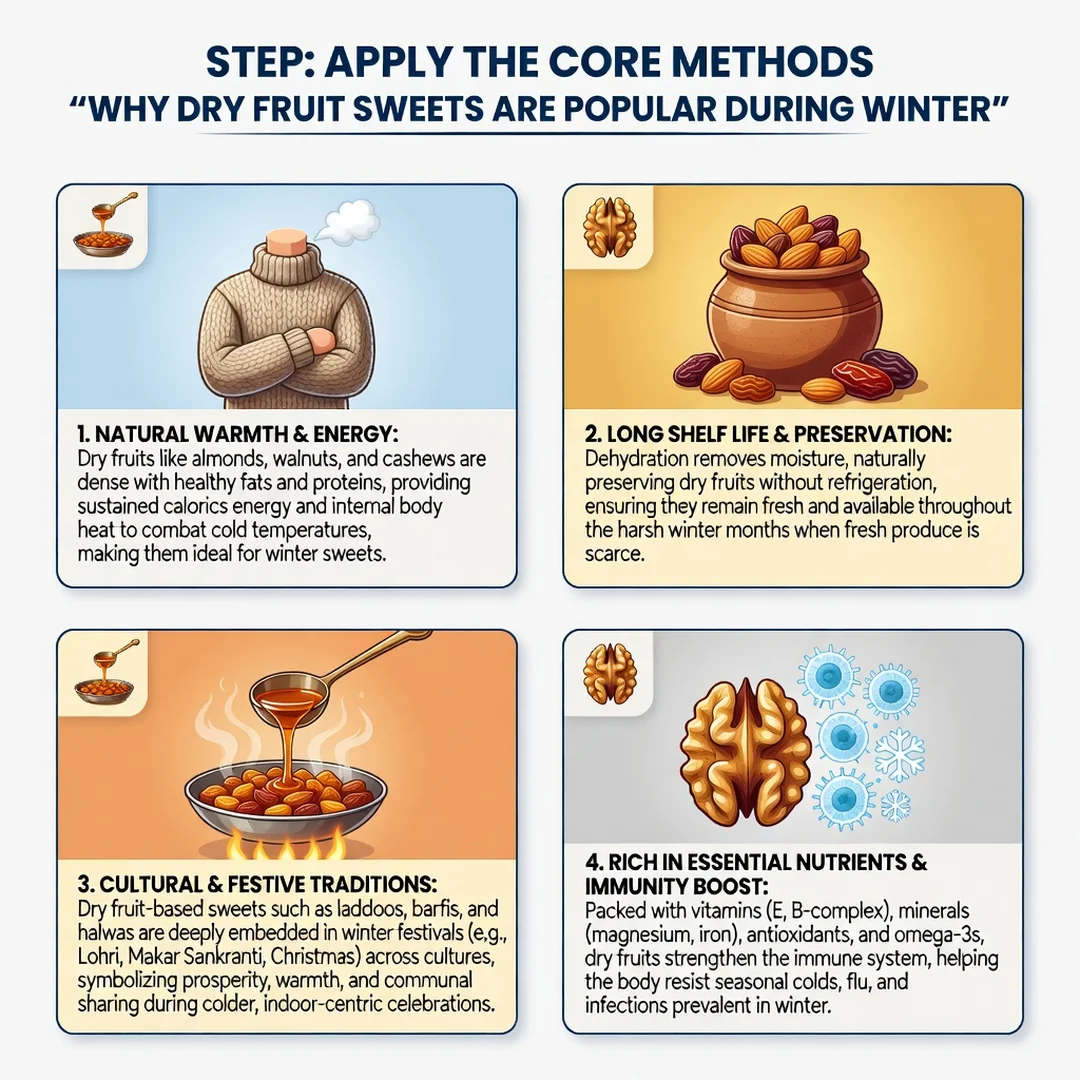
Step 5: Apply the core methods
Put your plan into practice: buy or prepare small batches, portion them out, pair with protein or fiber, and monitor how your body responds. Adjust quantities and frequency based on energy, digestion, and overall well-being.
FAQ
What should I know about Why Dry Fruit Sweets Are Popular During Winter?
They are popular because they provide concentrated energy and nutrients that suit cold-weather physiological needs, carry cultural prestige during festive months, and keep well for gifting and hosting. They are not inherently “health foods” in unlimited quantities — portion and quality matter.
Who is this guide for?
This guide is for general readers who want to understand the seasonal appeal of dry fruit sweets and make practical, informed choices about enjoying them. It is especially useful for home cooks, gift-givers, and anyone managing winter nutrition or blood sugar considerations.
Conclusion
Dry fruit sweets earn their winter popularity through a mix of nutrition, physiology, tradition, and practicality. By understanding the fundamentals, assessing your own needs, setting clear goals, gathering quality resources, and applying mindful habits, you can enjoy these seasonal treats without losing sight of balance. Reliable information and consistent habits lead to better long-term outcomes — whether you are savoring a single piece of badam barfi or sharing a box with loved ones on a cold evening.
Frequently Asked Questions
What should I know about Why Dry Fruit Sweets Are Popular During Winter?
This guide covers the essentials of Why Dry Fruit Sweets Are Popular During Winter with practical steps you can apply right away.
Who is this guide for?
Anyone looking for a clear, structured overview without unnecessary complexity.
You now have a solid foundation for Why Dry Fruit Sweets Are Popular During Winter. Apply the best practices above and revisit this guide as your needs evolve.