
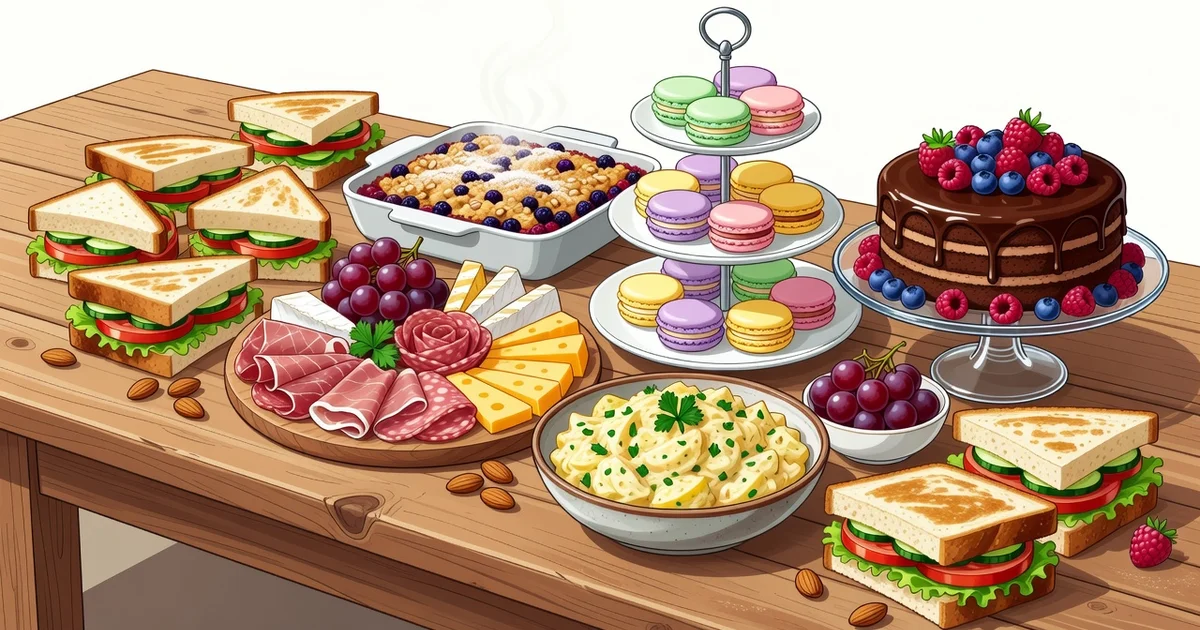
Planning a family gathering means pleasing a crowd with different tastes, and the right mix of treats can make or break the menu. Whether it’s a backyard barbecue, a holiday dinner, or a casual weekend get-together, finding the best sweet and savory treats for family gatherings ensures everyone leaves the table happy.
In this guide, we’ll explore crowd-pleasing options that balance flavors and suit all ages. From easy appetizers to irresistible desserts, you’ll find practical ideas to simplify your planning and delight every guest.
Introduction
Family gatherings live on the table. Whether it’s a backyard birthday, a holiday dinner, or a casual Sunday afternoon with cousins running through the kitchen, the food people remember most tends to fall into two camps: something sweet and something savory. The best hosts know that a successful spread isn’t about expensive ingredients or complicated techniques — it’s about balance, timing, and a few crowd-pleasing recipes that work every single time.
This article explores Best Sweet and Savory Treats for Family Gatherings with clear, practical guidance. You’ll learn what makes a treat reliable for a crowd, how to pair sweet and savory items so nobody fills up before dinner, and which options travel well, hold up at room temperature, and satisfy picky eaters of all ages.
Key Concepts
Understanding the fundamentals of Best Sweet and Savory Treats for Family Gatherings helps you make informed decisions. Before you write a shopping list or pick recipes, it helps to know the principles that separate a spread that gets devoured from one that sits untouched.
The sweet-savory balance
Humans are wired to enjoy contrast. A bite of rich, salty cheese followed by a piece of dark chocolate feels more satisfying than either alone. At a gathering, this means offering both categories deliberately rather than treating dessert as an afterthought. A savory item wakes up the palate; a sweet item provides a sense of finish and celebration.
Portability and holding time
Party food has to survive reality: warm rooms, crowded counters, and guests who arrive at different times. Treats that hold their texture for two to three hours — cookies, brownies, spiced nuts, cured meats, firm cheeses, and baked savory bites — reduce stress and food waste. Anything requiring last-minute assembly should be limited to one or two items.
Inclusivity across ages and diets
A good spread includes options for toddlers, grandparents, and everyone in between. Nuts, dairy, gluten, and shellfish are common allergens, so labeling dishes and offering at least one nut-free, one gluten-free, and one dairy-free option keeps more people at the table.
Make-ahead vs. made-to-order
Experienced hosts front-load the work. Roughly 80 percent of the menu should be make-ahead, with the remaining 20 percent finished fresh for aroma and visual appeal.
Deep Dive
Let’s get specific about what actually works. Below are categories of treats that consistently perform well at family gatherings, along with notes on why.
Savory treats that disappear first
- Cheese and charcuterie boards: A mix of hard and soft cheeses, cured meats, olives, pickles, and crackers is the single most reliable savory centerpiece. It requires no cooking and scales to any crowd size.
- Sausage rolls and pigs in blankets: Warm, handheld, and familiar. Puff pastry versions look impressive but take minutes to assemble.
- Spiced roasted nuts: Savory-sweet crossover items that hold for days in an airtight container.
- Deviled eggs and stuffed mushrooms: Classic, inexpensive, and easy to prepare the morning of the event.
- Savory quick breads: Cheddar-herb scones or bacon-cheddar muffins slice and serve without fuss.
Sweet treats with wide appeal
- Brownies and blondies: Dense, portable, and forgiving of being made a day early. Cut into small squares so guests can sample more than one dessert.
- Drop cookies: Chocolate chip, oatmeal raisin, and snickerdoodles are universally liked and freeze beautifully.
- Fresh fruit platters: The light option that balances heavier desserts. Add a yogurt dip for kids.
- Mini tarts and bite-size pastries: Portion control built in, which matters when there are five other desserts on the table.
- Sheet cakes: For larger gatherings, a single frosted sheet cake feeds a crowd far more cheaply than individual slices.
Drinks and the sweet-savory bridge
Don’t overlook beverages. A pitcher of unsweetened iced tea, lemon water, or a simple punch complements both categories without overwhelming either. For evening gatherings, one signature mocktail or cocktail keeps the drink station simple and self-serve.
Common mistakes to avoid
- Offering only heavy, fried, or overly rich items, which leaves guests feeling sluggish.
- Choosing recipes that require oven time during the event, creating bottlenecks in the kitchen.
- Forgetting to label allergens or provide serving utensils and trash receptacles nearby.
- Overcommitting to too many dishes — five to seven total treats is plenty for most home gatherings.
Best Practices
Reliable information and consistent habits lead to better long-term outcomes — and the same is true for hosting. These habits make gatherings easier year after year.
- Plan the menu on paper first. List sweet and savory items in separate columns and check the balance before shopping.
- Cook to your equipment. If you have one oven, choose at most two items that need baking on the day.
- Prep in stages. Shop two days ahead, bake one day ahead, and assemble the morning of.
- Buy quality where it shows. Good cheese, real butter, and fresh herbs make simple recipes taste special.
- Label everything. A small card noting ingredients protects guests with allergies and saves you from answering the same question repeatedly.
- Keep portions bite-sized. Smaller servings encourage sampling and reduce waste.
- Ask for help. Family gatherings are communal by nature; assigning one dessert to an aunt or a cousin spreads the workload and the goodwill.
Step-by-Step: Putting It All Together
Follow this sequence to build a balanced spread from scratch, whether this is your first gathering or your fiftieth.
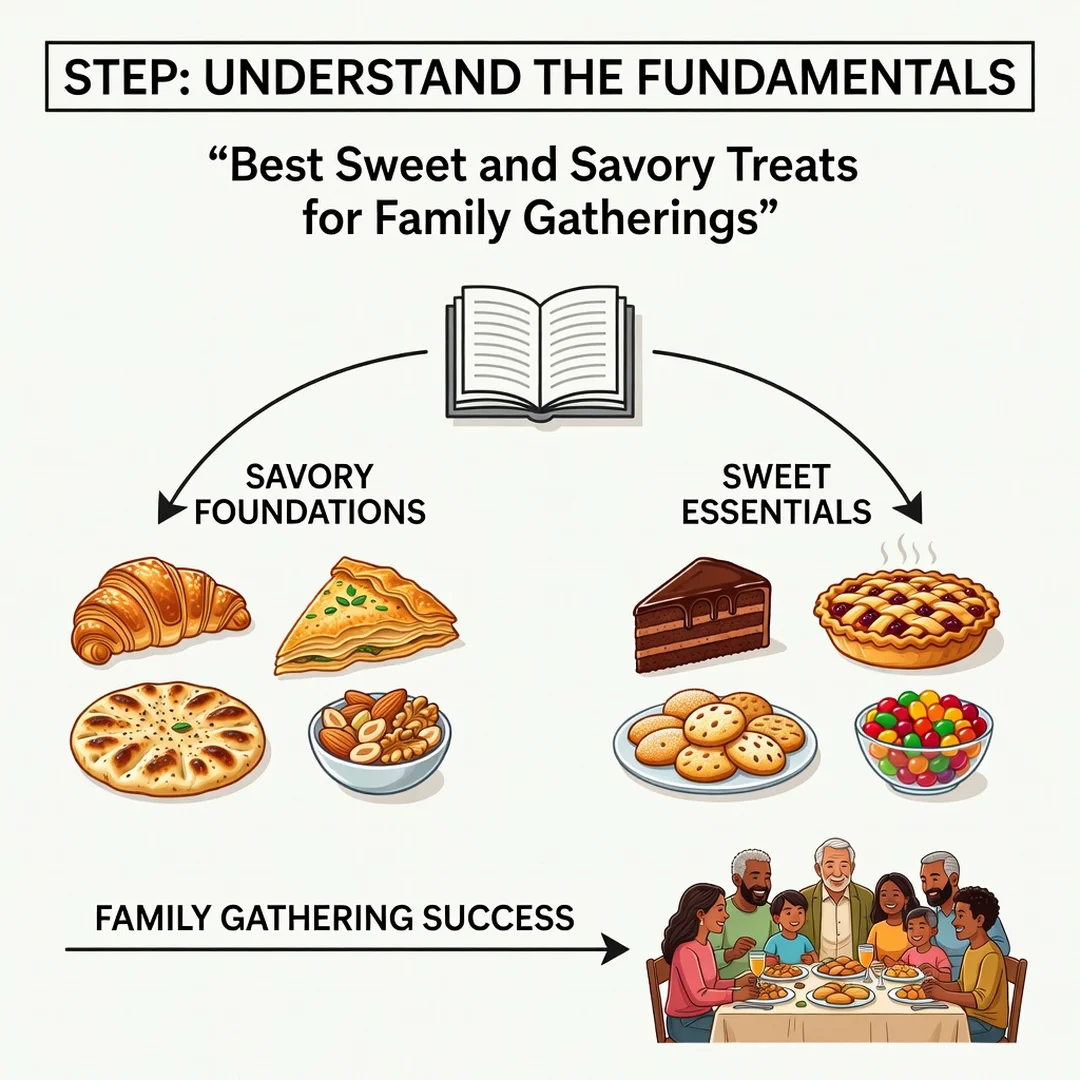
Step 1: Understand the fundamentals
Review the balance principles above. Decide how many sweet items and how many savory items your guest count requires. A rough starting ratio is two savory items for every sweet item if the gathering is around a mealtime, or one-to-one if it’s an afternoon snack event.
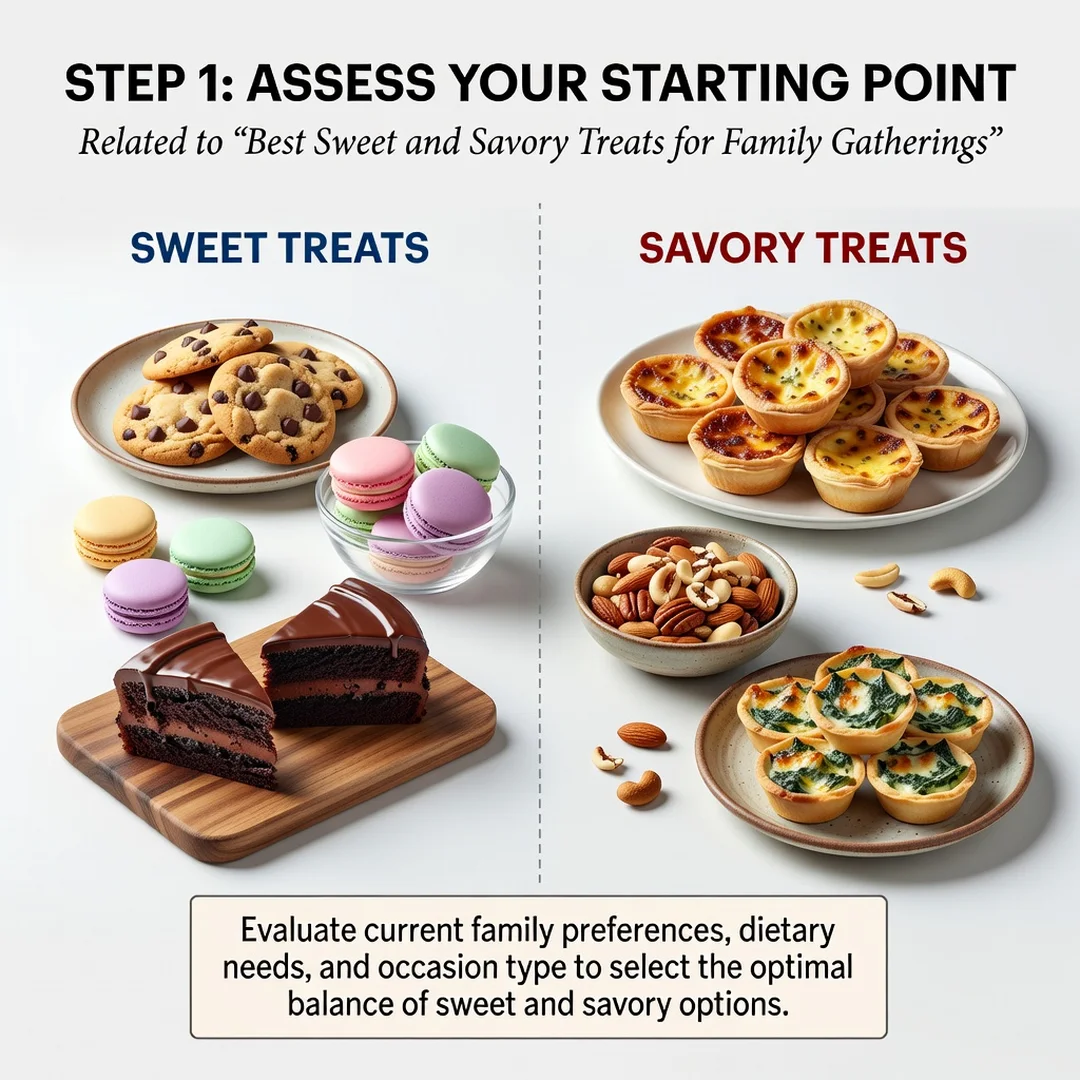
Step 2: Assess your starting point
Take stock of what you already have: pantry staples, freezer space, serving platters, and time. Note your oven capacity, refrigerator room, and how many hours you can realistically dedicate to preparation. This reality check prevents overcommitting.
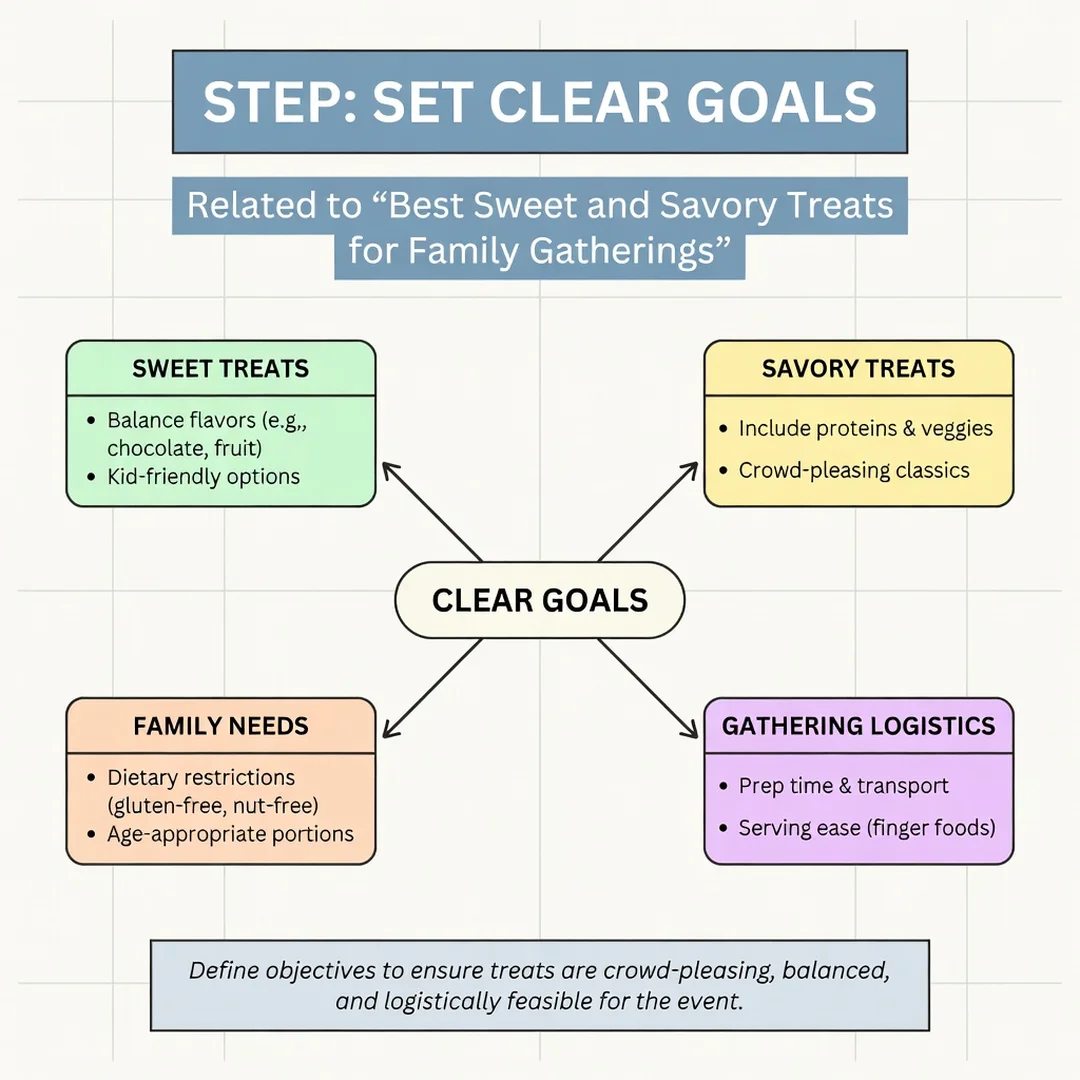
Step 3: Set clear goals
Define what success looks like. That might be “no dish requires more than 30 minutes of active work,” “everything fits on two platters,” or “at least three items are nut-free.” Written goals make menu decisions faster and more consistent.
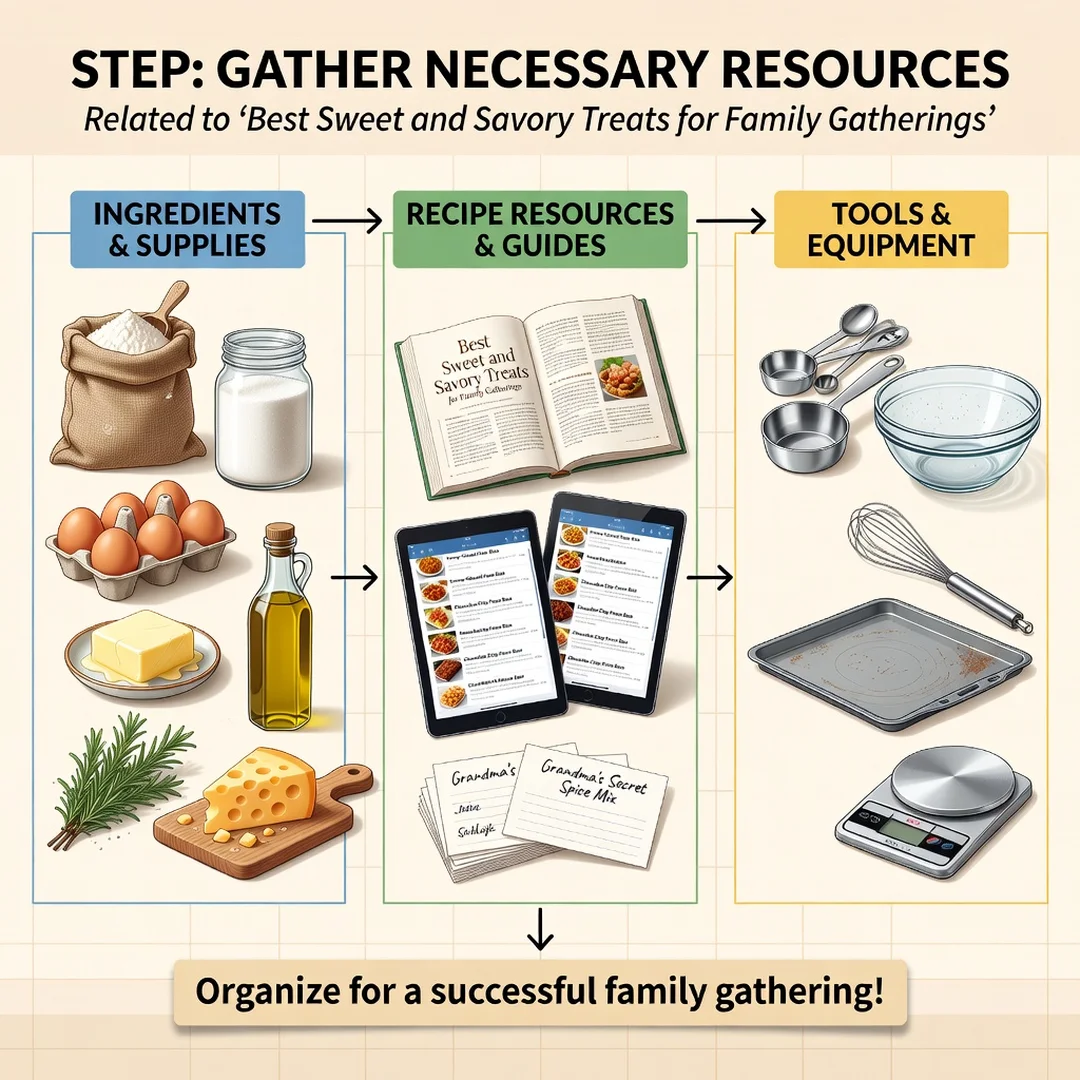
Step 4: Gather necessary resources
Build your shopping list organized by store section, then confirm equipment: cutting boards, serving utensils, labels, and storage containers. Check for allergen-safe preparation surfaces if needed. Buy shelf-stable items first and perishables last.
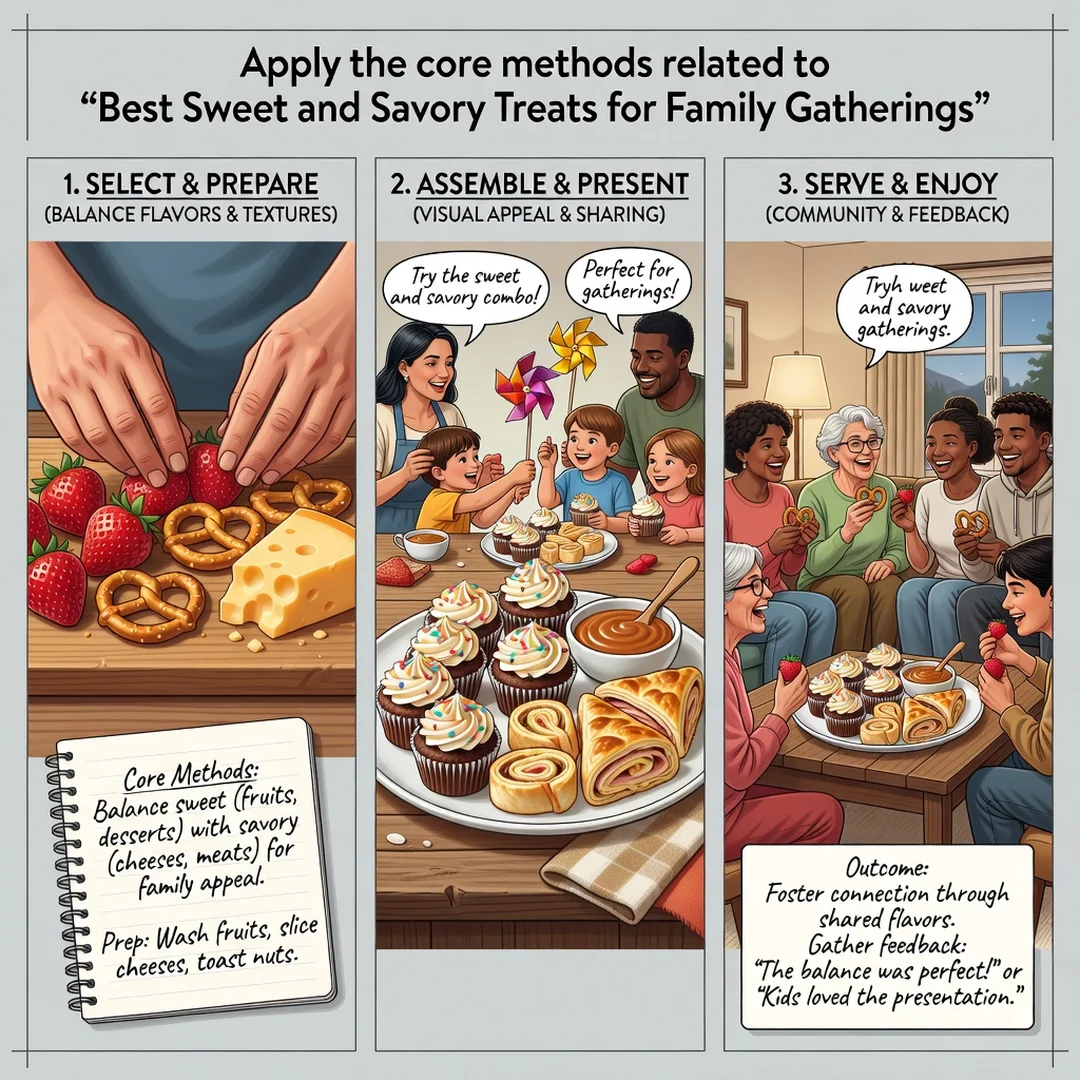
Step 5: Apply the core methods
Execute in order of shelf life: bake cookies and brownies first, roast nuts and prepare savory breads next, then assemble cheese boards, fruit platters, and dips on the day. Set out savory items first and bring desserts out about an hour after guests arrive. Keep backups in the fridge and replenish platters rather than putting everything out at once.
FAQ
What should I know about Best Sweet and Savory Treats for Family Gatherings?
The most important thing to know is that balance and logistics matter more than recipe complexity. A spread with a few well-chosen savory items and a few reliable sweet items, most of them prepared in advance, will outperform an elaborate menu that leaves you stressed and stuck in the kitchen. Focus on treats that hold up at room temperature, offer allergen-friendly options, and suit a range of ages. Understanding the fundamentals of Best Sweet and Savory Treats for Family Gatherings helps you make informed decisions rather than guessing.
Who is this guide for?
This guide is for anyone who hosts or contributes to family gatherings — parents, grandparents, young adults hosting their first holiday, or relatives asked to bring a dish. It assumes no professional cooking skill. The recommendations scale from a group of six to a group of sixty, and they work for birthdays, reunions, holidays, and casual weekend get-togethers alike.
How many treats should I prepare per guest?
For a snack-style gathering, plan roughly four to six bites per person across all items. For an event centered on a meal, three to four bites per person is sufficient. Always round up slightly; running out of food is a bigger problem than leftovers.
Can I make these treats ahead of time?
Yes. Cookies, brownies, spiced nuts, and savory quick breads can be made one to two days ahead and stored in airtight containers. Cheese boards and fruit platters are best assembled within a few hours of serving. Frozen items should be thawed overnight in the.
You now have a solid foundation for Best Sweet and Savory Treats for Family Gatherings. Apply the best practices above and revisit this guide as your needs evolve.