
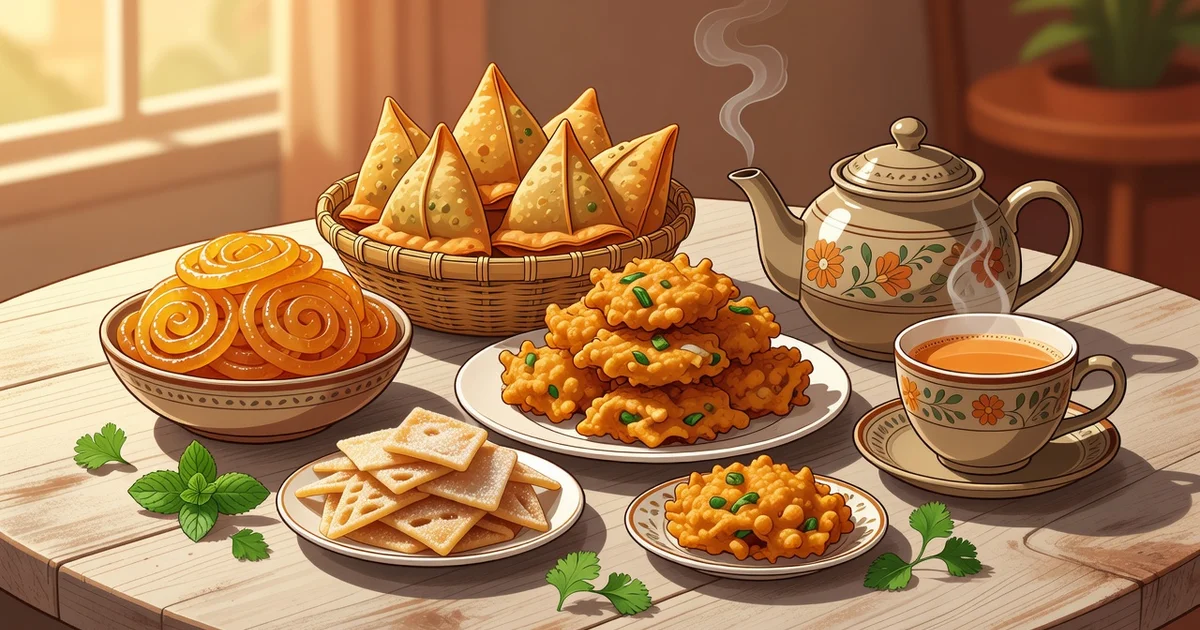
Tea time in Pakistan is more than a daily habit—it’s a cherished ritual. Whether you prefer strong doodh patti or a lighter green tea, the right snack transforms an ordinary cup into a moment worth savoring. From crispy samosas to sweet barfi, the country’s traditional treats are built for pairing.
In this guide, we explore the best traditional Pakistani snacks that pair perfectly with tea. You’ll discover what to serve, why each pairing works, and how to enjoy authentic flavors at home—so your next chai break is anything but ordinary.
Introduction
Tea is more than a beverage in Pakistan — it is a ritual, a social glue, and a daily comfort. Whether it is the strong, milky doodh patti simmered on a stove in Karachi or the light, cardamom-scented kahwa poured in Peshawar, the experience is never complete without something to nibble alongside. This article explores traditional Pakistani snacks that pair perfectly with tea with clear, practical guidance. The goal is simple: help you choose the right snack for the right tea, understand why certain combinations work, and build habits that make every chai break more satisfying.
Understanding the fundamentals of traditional Pakistani snacks that pair perfectly with tea helps you make informed decisions, whether you are hosting guests, planning a small family gathering, or simply looking to elevate your own evening cup. Reliable information and consistent habits lead to better long-term outcomes — not just in taste, but in how you shop, prepare, and share these foods.
Key Concepts
Before diving into specific snacks, it helps to understand a few core concepts that govern Pakistani tea-time pairing.
Flavor Balance
Pakistani teas range from intensely milky and sweet (doodh patti) to light and floral (kahwa or green tea). Snacks must balance these profiles. A heavy, oily snack like pakora demands a strong, cutting tea. A delicate tea like kahwa calls for something light, such as plain biscuits or dried fruit.
Texture and Mouthfeel
Tea cleanses the palate. Crunchy, flaky, or crispy snacks — samosas, biscuits, papad — work well because they contrast with the smooth, warm liquid. Soft, dense snacks like halwa or gulab jamun can overwhelm a light tea but pair beautifully with strong, unsweetened chai.
Regional Variations
Pakistan is diverse. In Punjab, tea is often paired with fried savory snacks like samosas and pakoras. In Sindh, you will find more sweet biscuits and rusk. In Khyber Pakhtunkhwa, nuts and dried fruits accompany green tea. In Balochistan, simple bread and cheese or date-based snacks are common. Recognizing these regional patterns helps you choose authentic pairings.
Occasion and Time of Day
Morning tea is lighter — biscuits, rusk, or toast. Afternoon tea (often after lunch) can handle heavier fried snacks. Evening tea, especially in winter, often features warm, spiced snacks. Late-night tea is usually simple and light to avoid heaviness before sleep.
Deep Dive
Now let us examine the most traditional Pakistani snacks and why they work so well with tea.
1. Samosas
The triangular, deep-fried pastry filled with spiced potatoes, peas, or minced meat is perhaps the most iconic tea-time snack. Its crispy shell and savory filling cut through the richness of milky chai. Best paired with: doodh patti or strong black tea with lemon.
2. Pakoras
Onion, potato, or spinach fritters made with gram flour (besan). Pakoras are especially popular during monsoon and winter. Their oily, spicy nature demands a hot, strong tea to balance the heaviness. Best paired with: kadak chai (strong boiled tea) or mint chutney on the side.
3. Biscuits and Rusk
From simple glucose biscuits to cardamom-flavored rusk, these are the everyday heroes of Pakistani tea time. They are light, affordable, and absorbent — perfect for dunking. Best paired with: any tea, but especially light green tea or kahwa.
4. Namkeen Mix (Chivda)
A crunchy mixture of sev, peanuts, fried lentils, and spices. It is savory, salty, and slightly tangy. It keeps the palate engaged without filling you up. Best paired with: unsweetened or lightly sweetened tea.
5. Gulab Jamun and Barfi
Sweet, syrup-soaked or milk-based sweets. These are heavy and intensely sweet, so they pair best with strong, unsweetened tea or green tea without sugar. Best paired with: kahwa or plain black tea.
6. Dahi Baray
Lentil dumplings in yogurt with tamarind chutney. Cool, tangy, and creamy. This snack is refreshing and works well with a hot, strong tea to create temperature contrast. Best paired with: regular doodh patti.
7. Nuts and Dried Fruits
Almonds, pistachios, walnuts, raisins, and apricots. Common in northern areas and during winter. They are nutritious and naturally sweet. Best paired with: green tea or kahwa.
8. Papad
Thin, crispy lentil wafers, often roasted or fried. Light and salty, they are a quick snack that does not overpower the tea. Best paired with: any tea, especially in summer.
Best Practices
To get the most out of your tea-and-snack pairing, follow these practical guidelines.
- Match intensity: strong tea with heavy snacks, light tea with light snacks.
- Serve snacks at room temperature or slightly warm — not ice-cold, unless it is a yogurt-based dish.
- Offer a variety: one fried, one baked, one sweet, one savory. This covers different preferences.
- Keep portions small. Tea time is about grazing, not a full meal.
- Use fresh oil for frying. Old oil ruins the flavor of both snack and tea.
- Provide lemon wedges or mint chutney to cut through oiliness.
- For guests, pre-plate snacks in small bowls to avoid double-dipping and mess.
- Store biscuits and rusk in airtight containers to maintain crunch.
- If serving green tea, avoid strong spices in snacks — they clash.
- Consistency matters: a regular tea-time routine with balanced snacks supports better digestion and social connection over time.
Step-by-Step Guide to Pairing Traditional Pakistani Snacks with Tea
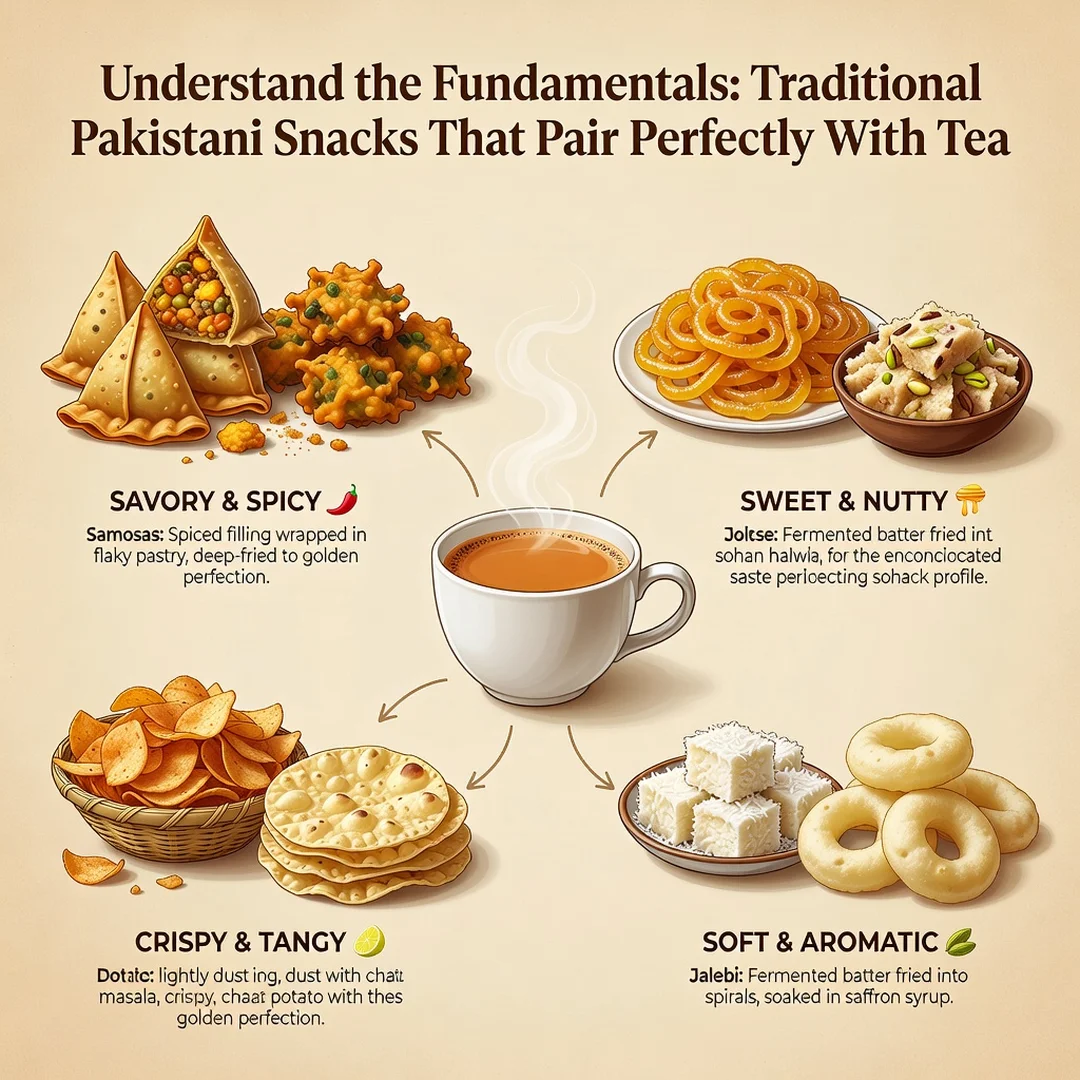
Step 1: Understand the fundamentals
Learn the basic flavor profiles of your tea. Is it milky and sweet? Light and floral? Bitter and strong? Also know your snack categories: fried, baked, sweet, savory, creamy, crunchy. This fundamental knowledge is the foundation for every good pairing decision.
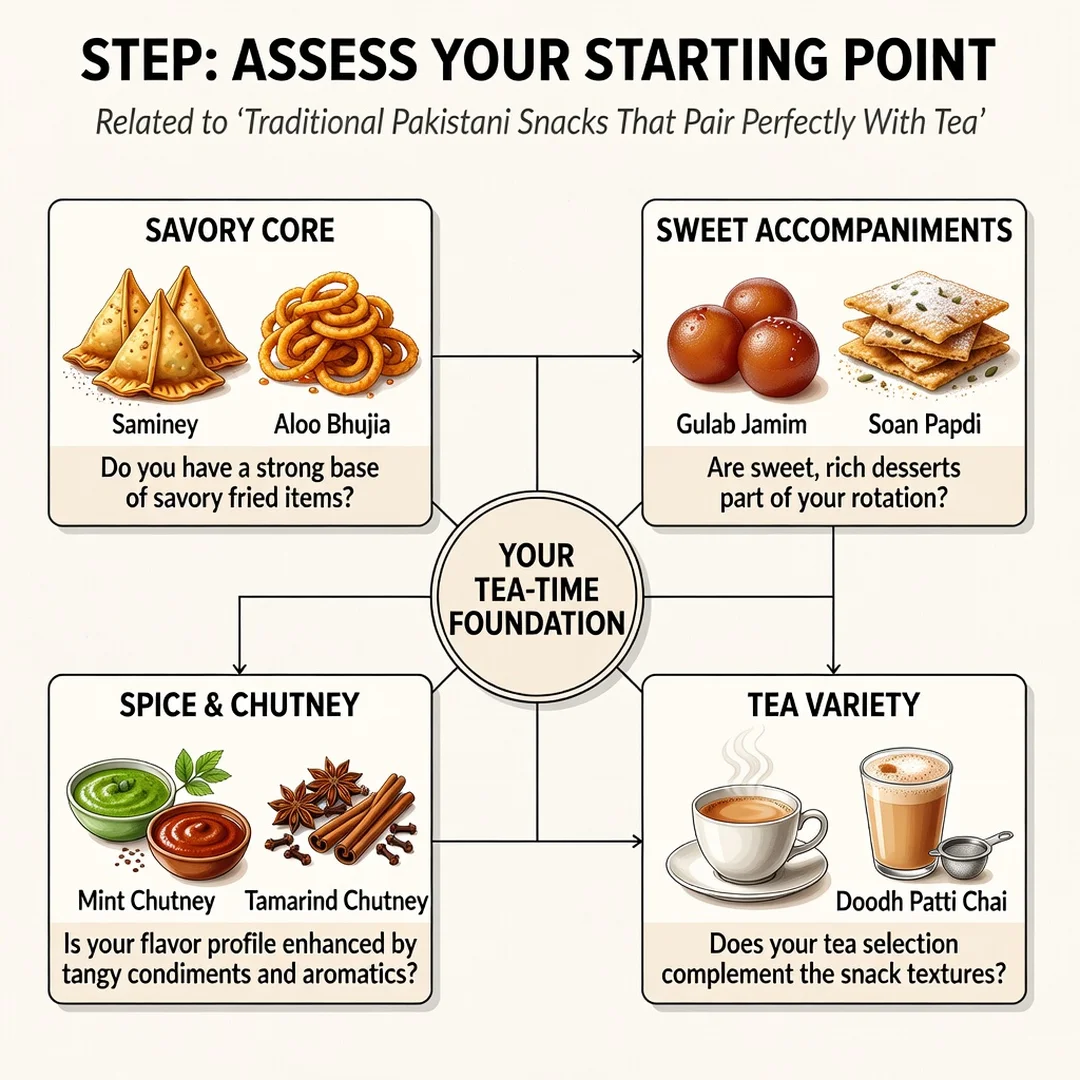
Step 2: Assess your starting point
Look at what you already have in your kitchen. Do you have biscuits, leftover samosas, nuts, or yogurt? Assess your time and energy. If you have 10 minutes, choose a no-cook snack. If you have 30 minutes, you can fry pakoras. Your starting point determines your realistic options.
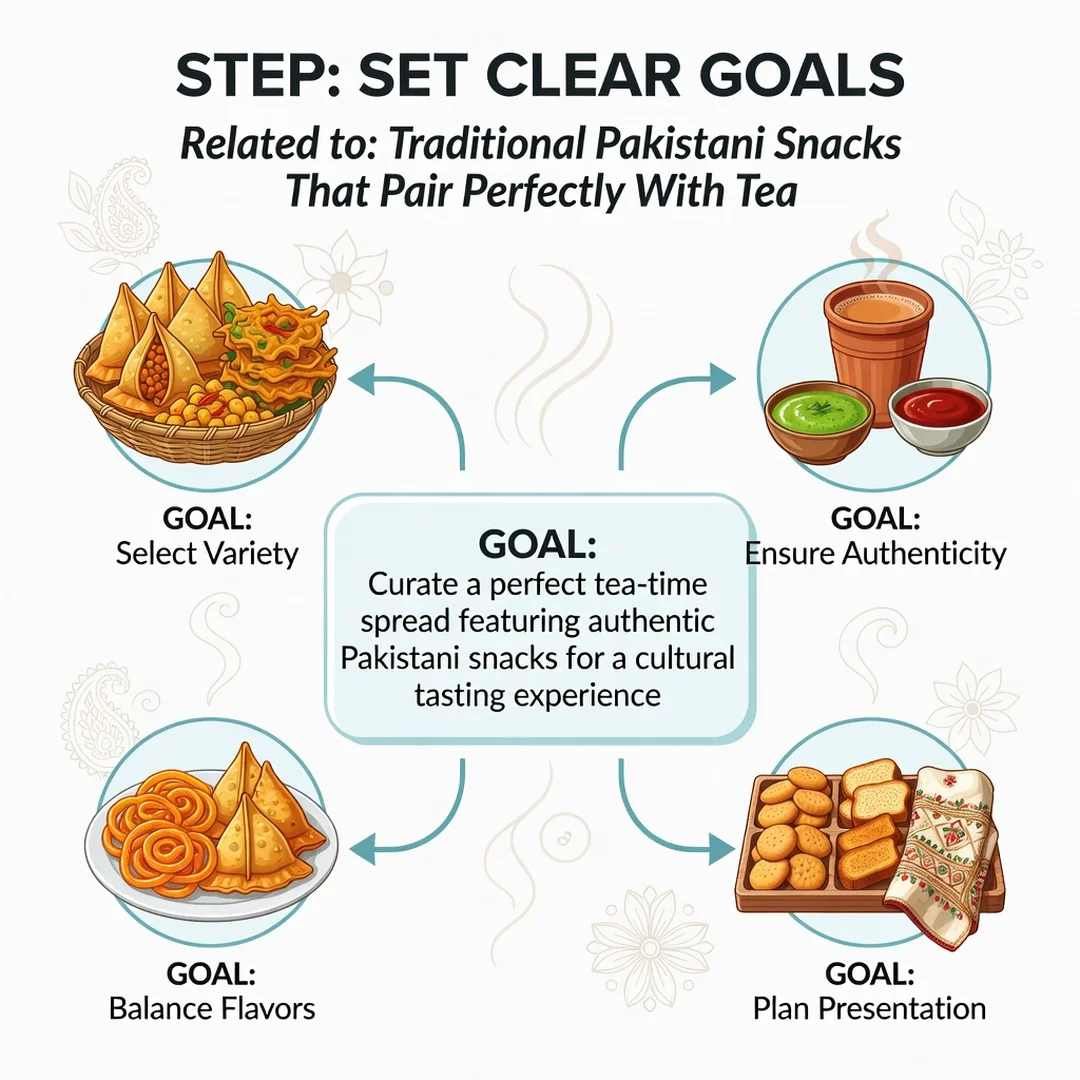
Step 3: Set clear goals
Decide what you want from this tea break. Is it comfort? Socializing? A quick energy boost? For comfort, choose warm, fried snacks. For socializing, offer a variety. For energy, choose nuts and dried fruits. Clear goals prevent random snacking and lead to better satisfaction.
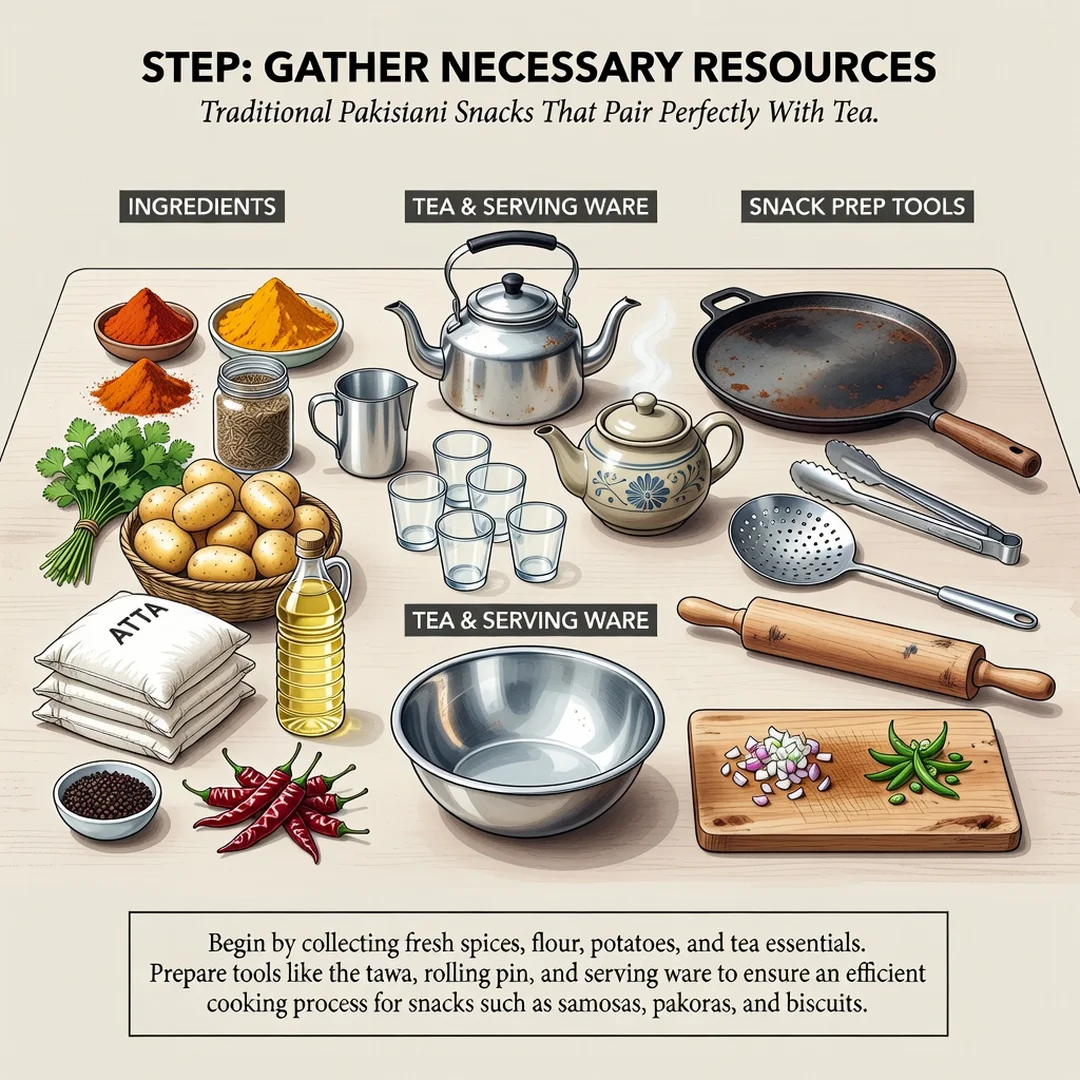
Step 4: Gather necessary resources
Collect your tea leaves, milk, sugar (or alternatives), and your chosen snacks. Ensure you have plates, napkins, and serving spoons. If frying, check oil and stove. If serving guests, arrange seating. Having everything ready avoids last-minute stress and keeps the experience pleasant.
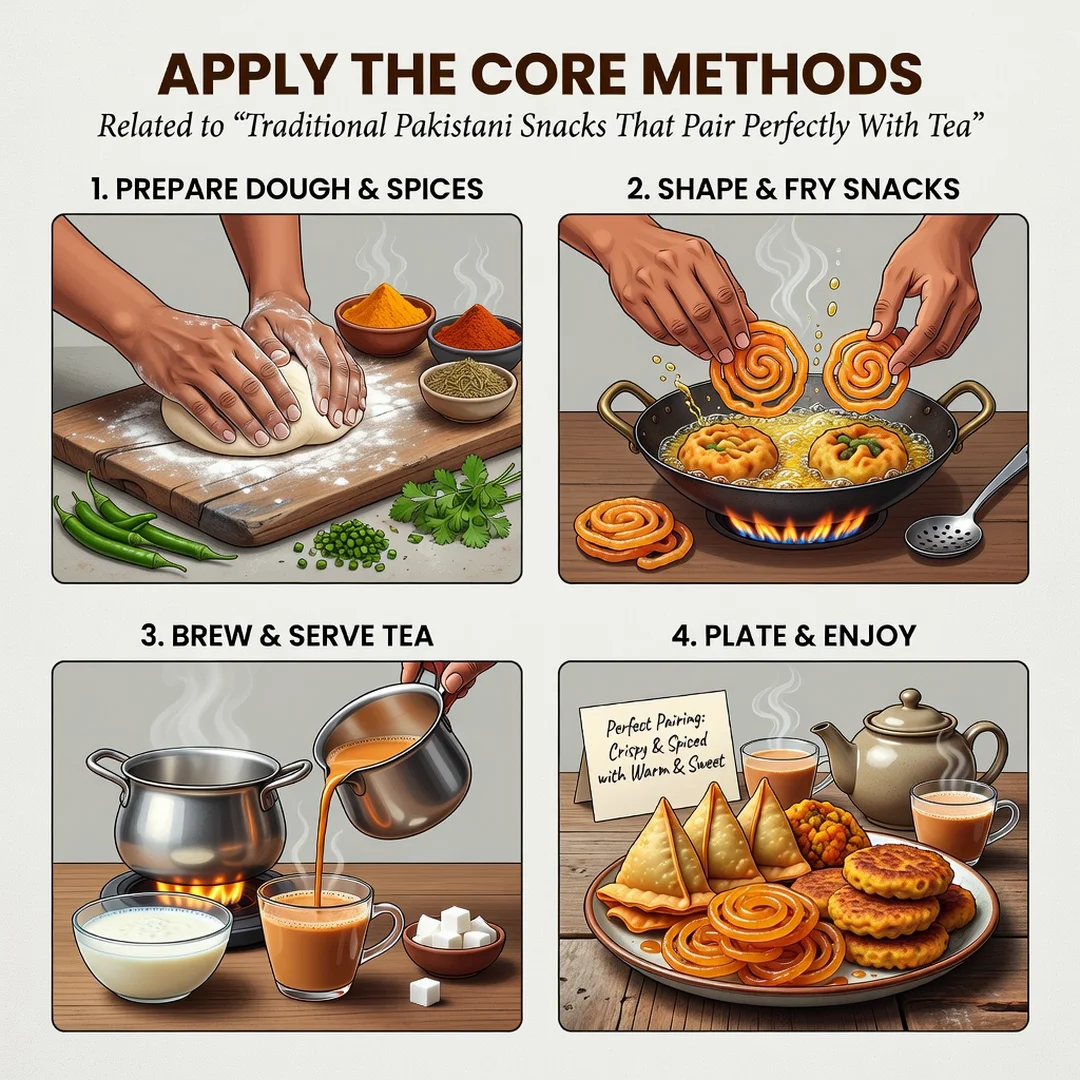
Step 5: Apply the core methods
Brew your tea first, then arrange snacks. For strong tea, use a rolling boil with full-fat milk. For light tea, steep green tea or kahwa for 2–3 minutes. Plate snacks in small portions. Serve immediately. Observe how the combination tastes and adjust next time — more spice, less sugar, different snack. Consistent practice leads to better long-term outcomes in both flavor and habit.
FAQ
What should I know about Traditional Pakistani Snacks That Pair Perfectly With Tea?
You should know that pairing is about balance: strong tea with heavy snacks, light tea with light snacks. Also, regional and seasonal preferences matter. Samosas and pakoras are classic for strong chai; biscuits and nuts work for green tea. Portion control and freshness are key. Finally, the social context — who you are with and when — often matters as much as the food itself.
Who is this guide for?
This guide is for anyone who enjoys Pakistani tea culture: home cooks, hosts, students, expatriates missing home flavors, and curious food lovers. It is also for people who want to make healthier or more intentional choices about their tea-time snacks. No prior cooking expertise is required — only an interest in combining traditional snacks with tea in a way that tastes good and feels right.
Conclusion
Traditional Pakistani snacks and tea are a timeless combination. By understanding key concepts like flavor balance and texture, exploring classic snacks from samosas to nuts, and following best practices for preparation and serving, you can turn every cup of chai into a small celebration. Use the step-by-step guide to build your own pairing habits. Reliable information and consistent habits lead to better long-term outcomes — not just in taste, but in the daily joy of a well-matched snack and a perfectly brewed cup of tea.
You now have a solid foundation for Traditional Pakistani Snacks That Pair Perfectly With Tea. Apply the best practices above and revisit this guide as your needs evolve.