
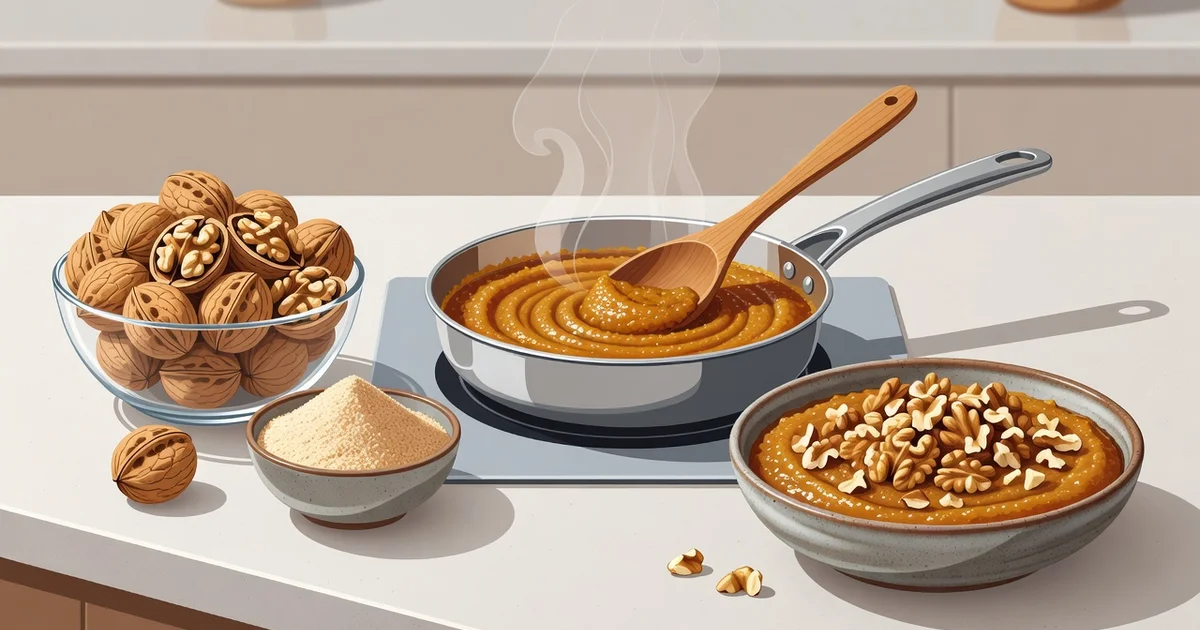
If you love traditional Indian desserts, learning how to prepare rich and delicious Akhrot Halwa is a rewarding skill worth mastering. Made from finely ground walnuts, ghee, and sugar, this indulgent treat delivers a deep, nutty flavour and a satisfyingly smooth texture that melts in your mouth. Whether you are hosting a festive gathering or simply craving a homemade sweet, this recipe fits the occasion perfectly.
In this guide, you will find clear, step-by-step instructions that make the process simple and stress-free. From selecting the best walnuts to achieving the ideal consistency, every detail is covered. With a few quality ingredients and a little patience, you can prepare rich and delicious Akhrot Halwa that rivals any sweet shop.
Introduction
Akhrot halwa, or walnut halwa, is a festive Indian dessert that transforms humble walnuts into a rich, aromatic, and deeply satisfying sweet. Unlike quick modern desserts, this recipe rewards patience and attention to detail. The result is a glossy, ghee-laden confection with a dense, melt-in-the-mouth texture and a warm, nutty flavor that lingers. This article explores How to Prepare Rich and Delicious Akhrot Halwa with clear, practical guidance, walking you through every stage from selecting walnuts to achieving the perfect final consistency. Whether you are preparing it for a festival, a family gathering, or simply to satisfy a craving, understanding the process makes all the difference between a good halwa and an unforgettable one.
Walnuts are the star here, and their natural oils and slight bitterness need to be balanced with sweetness and richness. The recipe is forgiving once you know the ratios and the signs to look for. You do not need professional equipment or rare ingredients—just fresh walnuts, ghee, sugar or jaggery, milk or khoya, and a heavy-bottomed pan. The magic lies in slow roasting and constant stirring, which develop the flavor and give the halwa its signature sheen.
Key Concepts
Before you begin, it helps to understand the building blocks of a great akhrot halwa. These concepts are simple but they determine whether your dessert turns out crumbly, greasy, or perfectly rich.
- Walnut selection and freshness: Fresh, light-colored walnut halves taste sweet and buttery. Old or dark walnuts turn bitter and can ruin the halwa. Always taste a piece before using.
- Ghee as the base: Ghee provides flavor, richness, and the glossy finish. It also prevents sticking. Do not substitute with oil if you want an authentic taste.
- Sweetener choice: Sugar gives a clean sweetness, while jaggery or brown sugar adds depth and a caramel-like note. Both work, but adjust the quantity to taste.
- Milk or khoya: Milk softens the mixture and helps bind it. Khoya (milk solids) makes the halwa denser and richer. You can use either, or a combination.
- Roasting and stirring: Roasting the walnuts and then the mixture over low to medium heat develops flavor and removes raw notes. Constant stirring ensures even cooking and prevents burning.
- Final consistency: The halwa is done when it leaves the sides of the pan and forms a soft, non-sticky ball. It will firm up further as it cools.
Understanding the fundamentals of How to Prepare Rich and Delicious Akhrot Halwa helps you make informed decisions. When you know why each step matters, you can adjust confidently if something looks or smells different from the recipe.
Deep Dive
Let us look more closely at the process, because the difference between average and excellent halwa often comes down to small details. Walnuts contain oils that can turn rancid if stored improperly, so buy from a reliable source and keep them in an airtight container in a cool place. If your walnuts taste even slightly bitter, soak them in warm water for 15 minutes, drain, and pat dry before roasting. This simple step removes some of the bitterness and makes the halwa taste cleaner.
Roasting is the heart of the recipe. Start by dry-roasting the walnuts in a pan for two to three minutes until fragrant, then set them aside. Next, heat ghee in the same pan and add the ground or finely chopped walnuts. Roasting the nuts in ghee for five to seven minutes on low heat releases their essential oils and deepens the flavor. You will notice the mixture darkening slightly and smelling intensely nutty. This is the point where many people rush, but slowing down here pays off.
Adding milk or khoya comes next. If using milk, add it gradually and keep stirring to avoid lumps. The mixture will look wet and loose; continue cooking until it thickens and pulls away from the sides. If using khoya, crumble it in and cook until it melts and combines fully. Then add your sweetener. Sugar will release water and loosen the mixture again, so be prepared to stir for another five to ten minutes until it thickens once more. A pinch of cardamom powder and a few saffron strands soaked in warm milk add aroma and a beautiful golden color.
The final stage is the most critical. The halwa is ready when it forms a single mass, glistens with ghee, and does not stick to your fingers when you touch a small cooled portion. If you overcook, it becomes hard and chewy; if you undercook, it stays soft and sticky. Remove it from the heat slightly before you think it is done, as residual heat continues to cook it. Transfer to a greased plate, flatten gently, and garnish with slivered almonds, pistachios, or more walnuts. Let it set for at least 30 minutes before cutting into squares.
Step-by-Step Guide
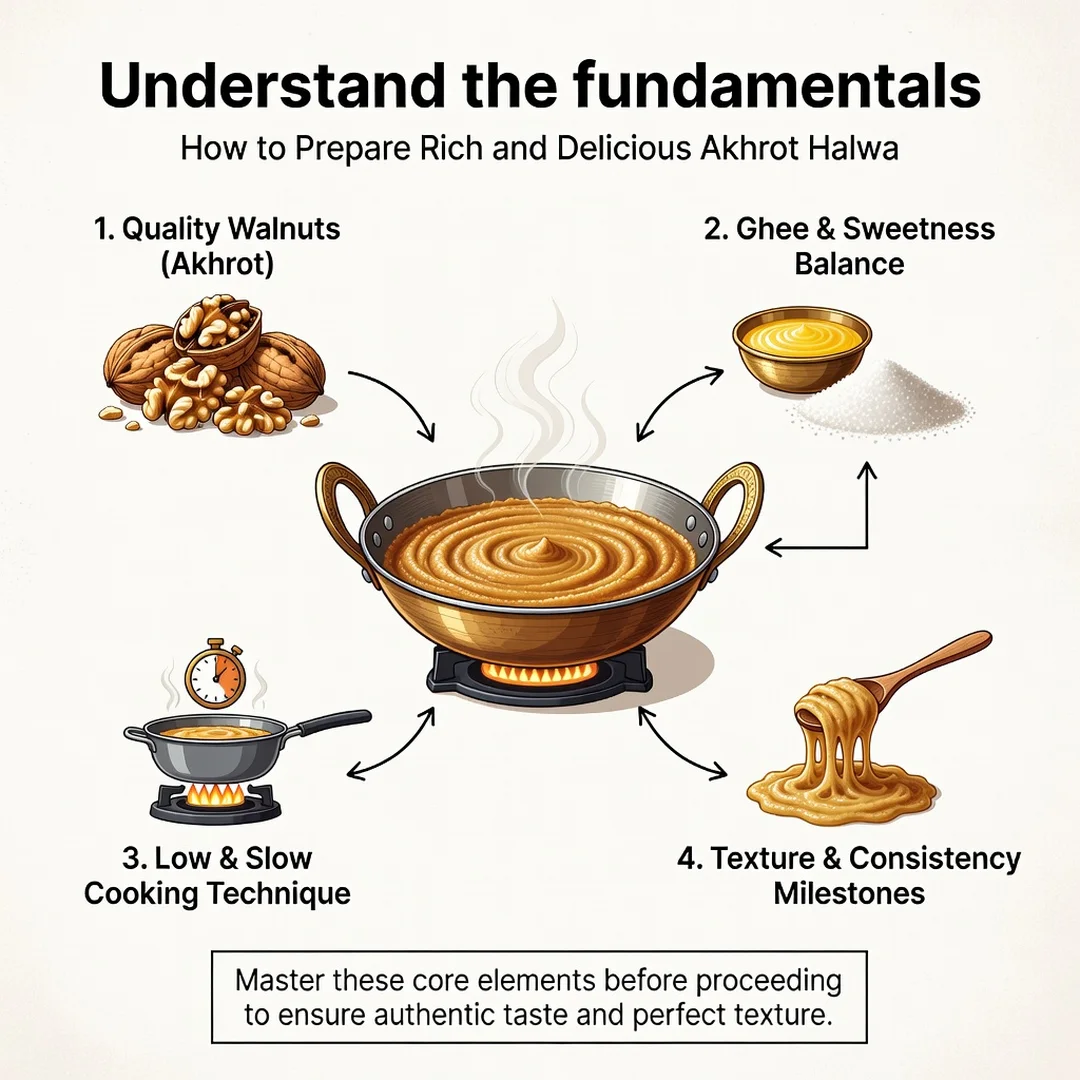
Step 1: Understand the fundamentals
Begin by reviewing the key concepts above. Know your ingredients, the role of each, and the signs of doneness. This mental preparation prevents common mistakes like burning the nuts or undercooking the mixture. Read the entire recipe once before you start.
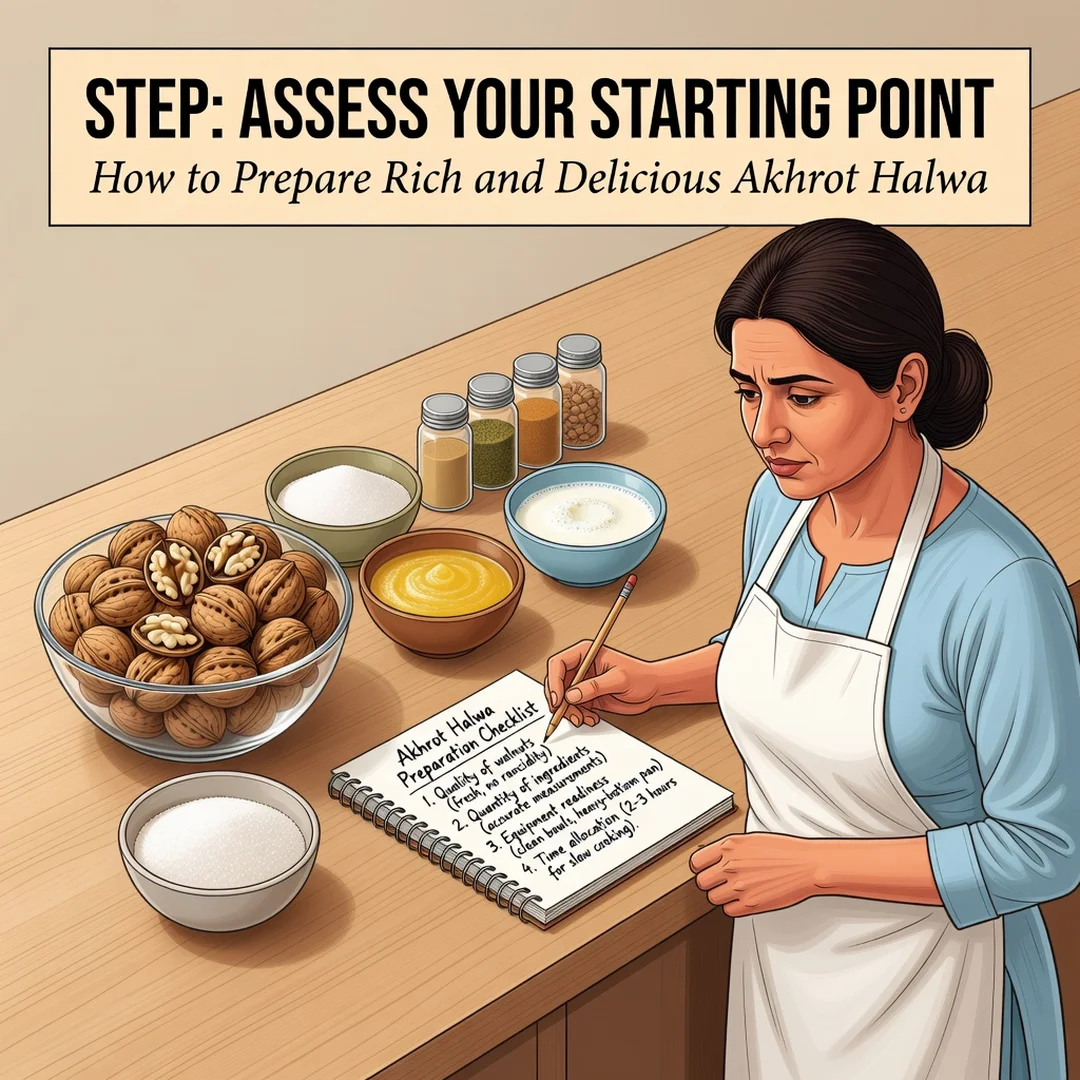
Step 2: Assess your starting point
Check what you have on hand. Do you have fresh walnuts, ghee, and a sweetener? Is your pan heavy-bottomed and clean? Taste a walnut to confirm it is not bitter. If you lack khoya, decide whether to use milk or a milk powder substitute. Knowing your starting point helps you plan adjustments.
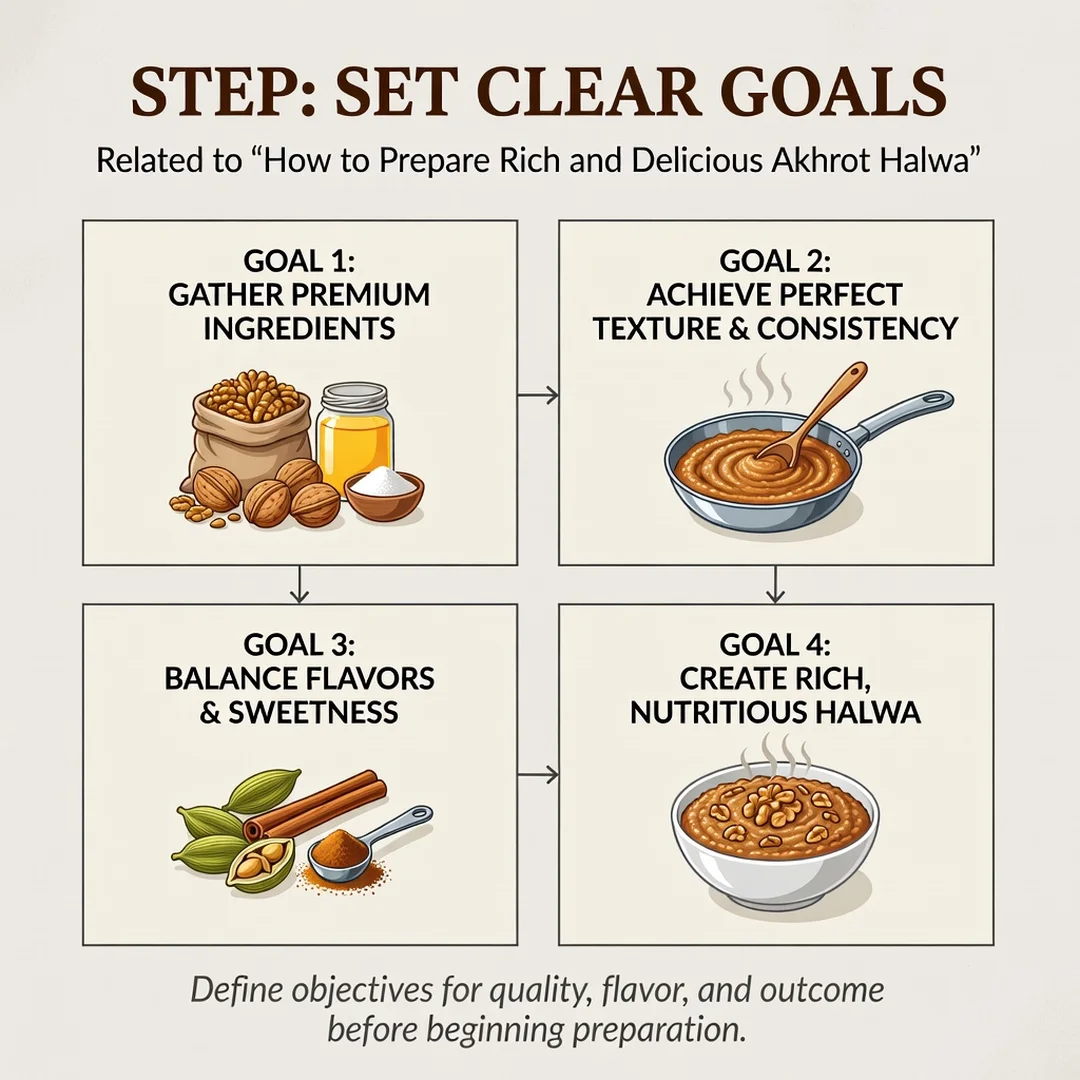
Step 3: Set clear goals
Decide what you want from your halwa. A softer, spoonable version for immediate serving, or a firmer, cuttable one for gifting? The goal affects cooking time and the amount of milk or khoya you add. Write down your target texture and sweetness level so you can judge the final result objectively.
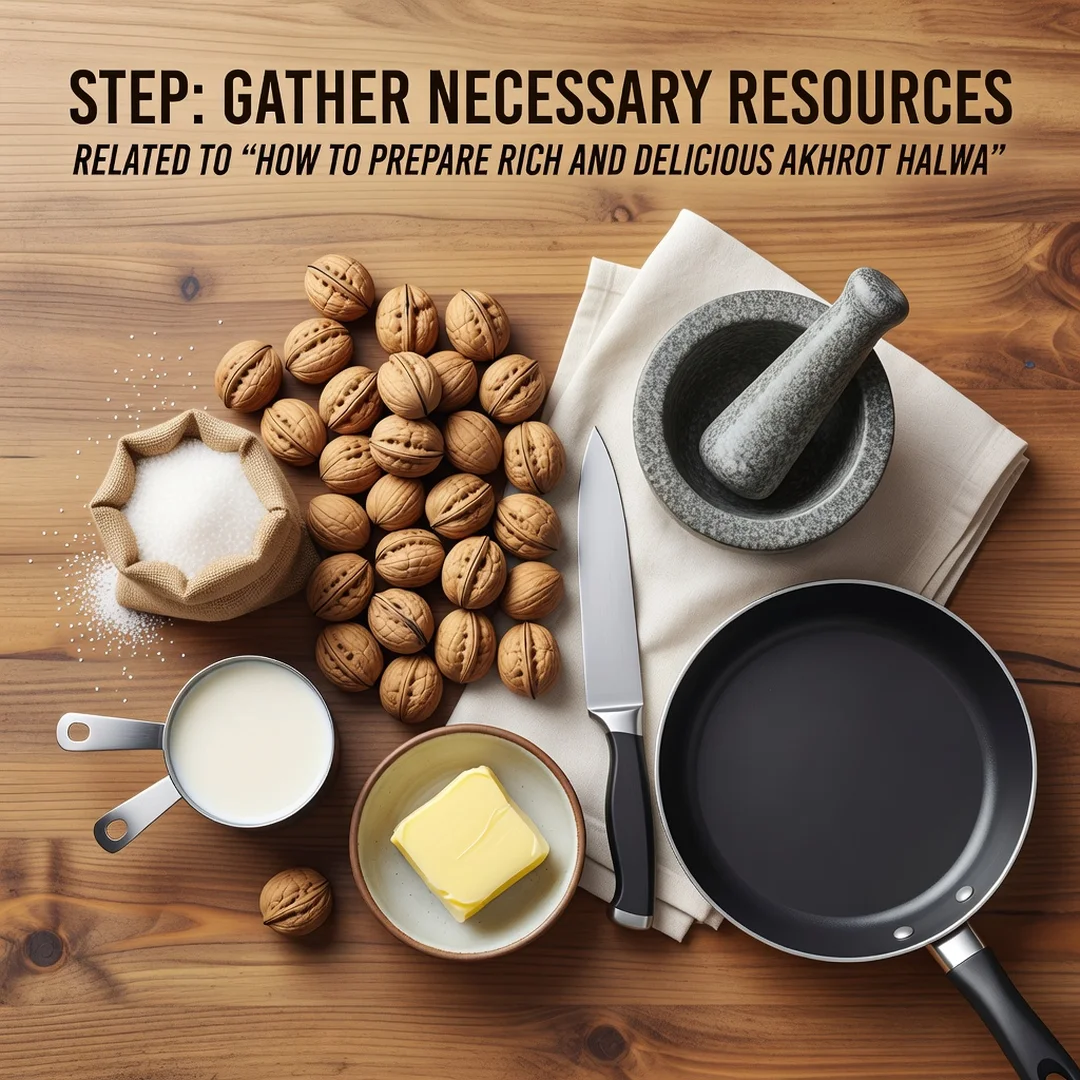
Step 4: Gather necessary resources
Collect all ingredients and tools before you turn on the stove. You will need a heavy-bottomed pan or kadai, a sturdy spatula, a grater or blender for walnuts, measuring cups, and a greased plate for setting. Measure walnuts, ghee, sugar or jaggery, milk or khoya, cardamom, and saffron. Having everything ready prevents burning or uneven cooking.
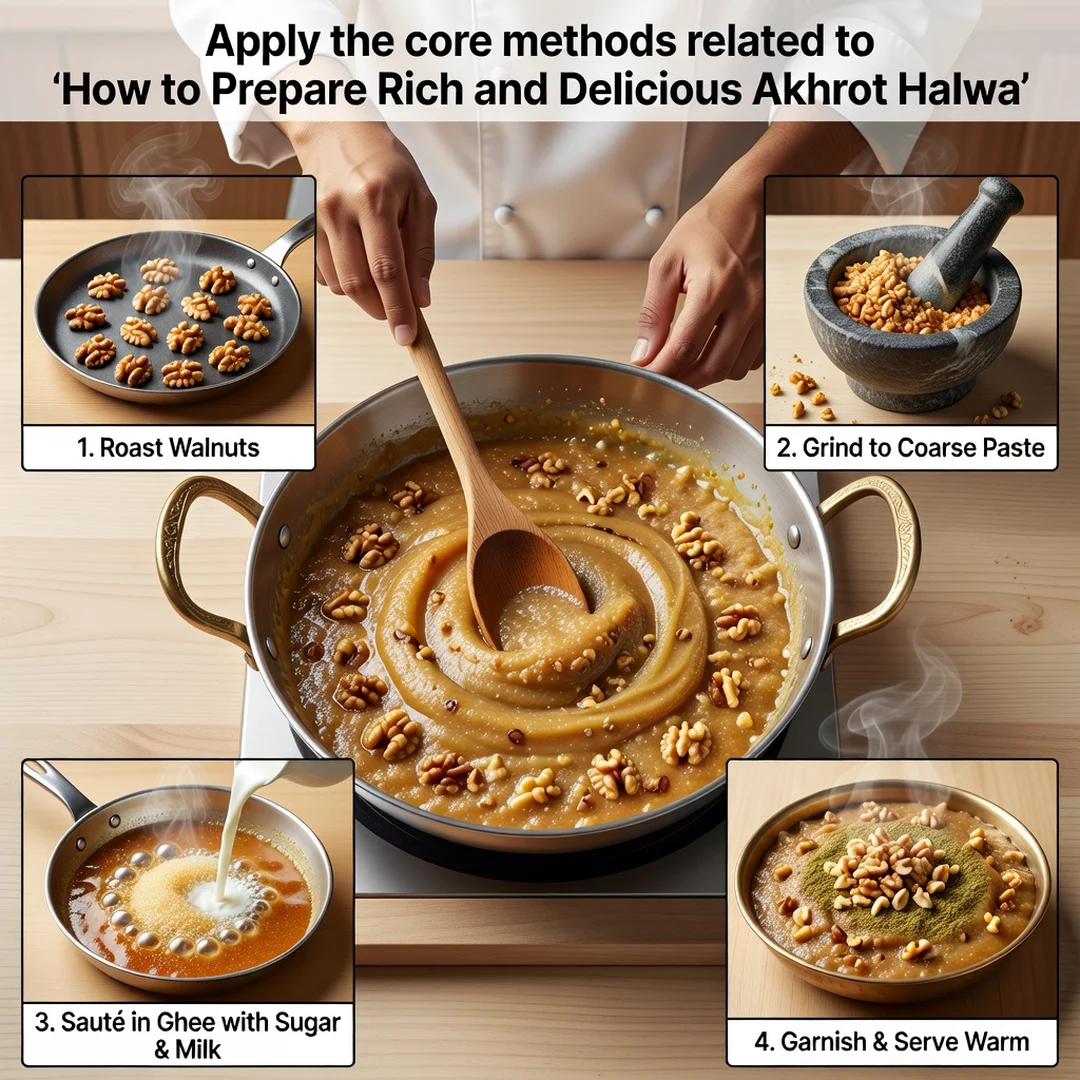
Step 5: Apply the core methods
Follow the deep dive instructions: dry-roast walnuts, roast them in ghee, add milk or khoya, sweeten, flavor, and cook until the mixture leaves the pan. Stir continuously over low to medium heat. Once done, spread on the greased plate, garnish, and cool. Cut into squares and store in an airtight container for up to a week.
Best Practices
Reliable information and consistent habits lead to better long-term outcomes. These best practices will help you get consistent results every time you make akhrot halwa.
- Use a heavy-bottomed pan to distribute heat evenly and prevent scorching.
- Keep the heat low to medium. High heat burns the nuts and makes the halwa grainy.
- Stir constantly once the milk or khoya is added. This prevents sticking and ensures a smooth texture.
- Add sweetener after the walnuts are well roasted. Adding it too early can cause the nuts to remain hard.
- Taste and adjust sweetness before the final thickening stage, as it becomes harder to mix later.
- Do not skip the resting time. The halwa sets as it cools, making it easier to cut and serve.
- Store leftovers in the refrigerator if you live in a warm climate. Bring to room temperature or warm slightly before serving.
- Experiment with add-ins like rose water, nutmeg, or a tablespoon of cocoa for a variation, but keep the base ratios intact.
FAQ
What should I know about How to Prepare Rich and Delicious Akhrot Halwa?
The most important thing is that patience and quality ingredients matter more than complex techniques. Use fresh walnuts, pure ghee, and cook slowly. The halwa is done when it leaves the sides of the pan and forms a soft ball. Also, remember that it firms up as it cools, so do not overcook it. A little practice will teach you to recognize the right texture by sight and feel.
Who is this guide for?
This guide is for anyone who wants to make authentic akhrot halwa at home—whether you.
You now have a solid foundation for How to Prepare Rich and Delicious Akhrot Halwa. Apply the best practices above and revisit this guide as your needs evolve.